The House of Wisdom: Baghdad's Literary Palace
The House of Wisdom: Baghdad’s Literary Palace
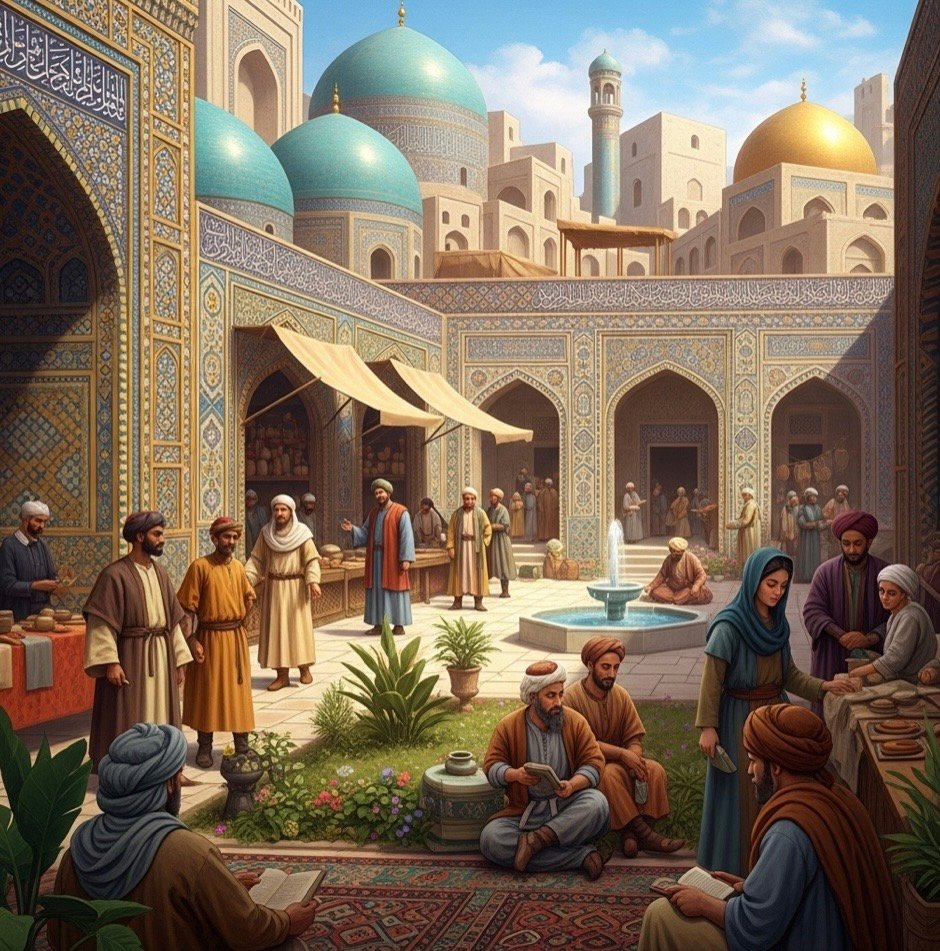
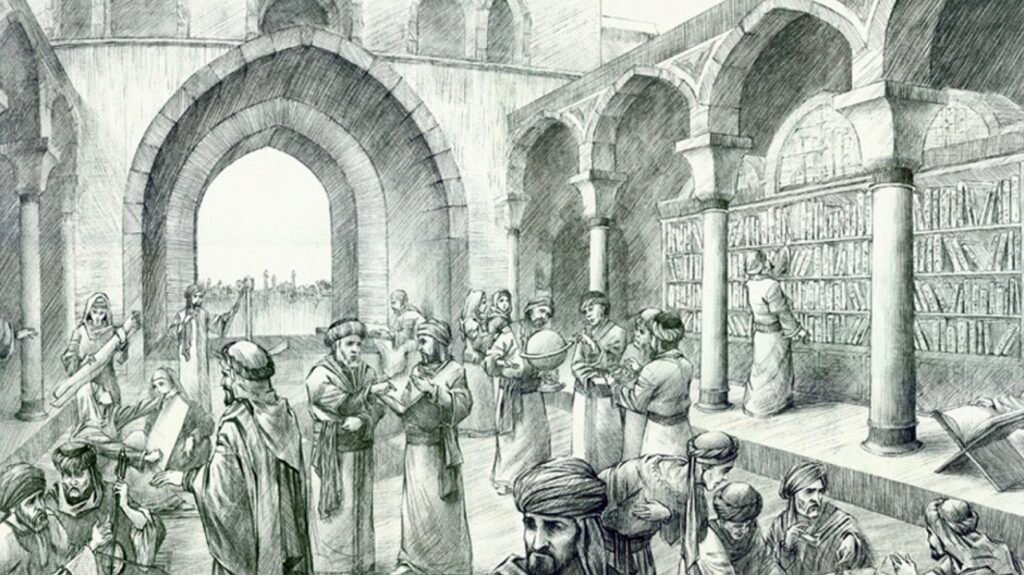
Baghdad, the capital of Iraq, was once a home to renowned center of learning known as Bayt al Hikmah. Bayt al Hikmah translates into English as The Baghdad House of Wisdom. The Baghdad House of Wisdom in the Abbasid era was a cultural hub of books and knowledge renowned across the Middle East & Europe. During the Islamic Golden Age, it was one of the first libraries that were public. The Baghdad House of Wisdom became one of the most important places for knowledge and literature that not only attracted Muslims but Christians and Jews and every nationality in the world!
Who Founded The House of Wisdom?
Scholars have debated who the true founder of The House of Wisdom or Bayt al-Hikmah. Some scholars have credited Abu Ja’far al-Mansur, who encouraged the translation of Persian, Greek & Indian works on medicine, astronomy, mathematics, engineering and of course literature. Abu began collecting these works in Baghdad which laid the foundation for what would become The House of Wisdom. Others believe it was established or possibly expanded under Harun al-Rashid. Harun al-Rashid brought valuable books and scholars from across the region to Baghdad. Another theory, suggests, Caliph al-Ma’mun who expanded the House of Wisdom by supporting the translation of Greek scientific and philosophical works. Regardless of whether Ma’mun was the founder of The House of Wisdom or not, it grew even more so under his reign because he was a passionate supporter of scholars, science, literature and intellectual debate. While the true founder of The House of Wisdom will remain a literary mystery lost to history, what is known is it developed over several Abbasid reigns with Abu Ja’far al-Mansur who laid the foundations, Harun al-Rashid expanding the collections and Caliph al-Ma’mun turning it into a major center of learning in the Middle Ages.
The House of Wisdom: Where Literature, Scholarship, Translation & Intellectual Debate Intertwine
Throughout the 9th to 13th centuries AD, The Baghdad House of Wisdom was very prominent & while it was a home for great literature, it was not its only purpose. If you were serious about science, medicine, astronomy or philosophy, Baghdad was where you were destined to be. Scholars being paid by the Abbasid caliphate, were given space to work and encouraged to challenge and improve already existing research that came before, whether it came from Greece, Persia or India. One of the most fascinating things about the House of Wisdom were, it wasn’t one man slowly copying manuscripts it was a wealth of knowledge. Scholars of many faiths whether they were Muslim, Christian or Jewish, worked together translating everything from Aristotle to ancient medical textbooks into Arabic.
Some translators were paid so well that they were rewarded by gold by the weight of their books. These texts were not just stored away, they were studied, debated, corrected and built upon turning Baghdad into the intellectual hub of the medieval world. The House of Wisdom was one of the few rare places in the medieval era where religion itself wasn’t the main topic of debate. You could walk into a room and find a Muslim astronomer, a Christian doctor & a Jewish mathematician arguing over the same problem in Arabic, which was the global language of science at the time. The House of Wisdom was a mixture, a hub of cultures, languages, & brainpower that made Baghdad the most important city on the earth for learning. This would be centuries before places like Oxford University even got started. “Cairo writes, Beirut prints, and Baghdad reads.”
The Tragic End Of The House of Wisdom
Unfortunately, nothing lasts forever. The House of Wisdom met it’s devastating end in the year 1258. Baghdad was invaded and overrun by the Mongol army led by Hulagu Khan, the grandson of Genghis Khan. This was one of the most devastating sackings of a city in the history of the world. After weeks of bombardment the Mongols smashed their way into Baghdad and went on a rampage that wiped out centuries of scholarship in just a few days. Scholars were murdered, libraries were looted and burned and priceless collections of the House of Wisdom were thrown into the Tigris River. Later writers claimed that the Tigris River turned black from ink and red from blood. Whether that’s true or not, is beside the point. The damage was done and the reality was grim. One of the greatest centers of learning had been erased as if never existed ending Baghdad’s golden age and leaving a cultural hole whose void will never be filled….
The Spirit of The House Of Wisdom Is Alive
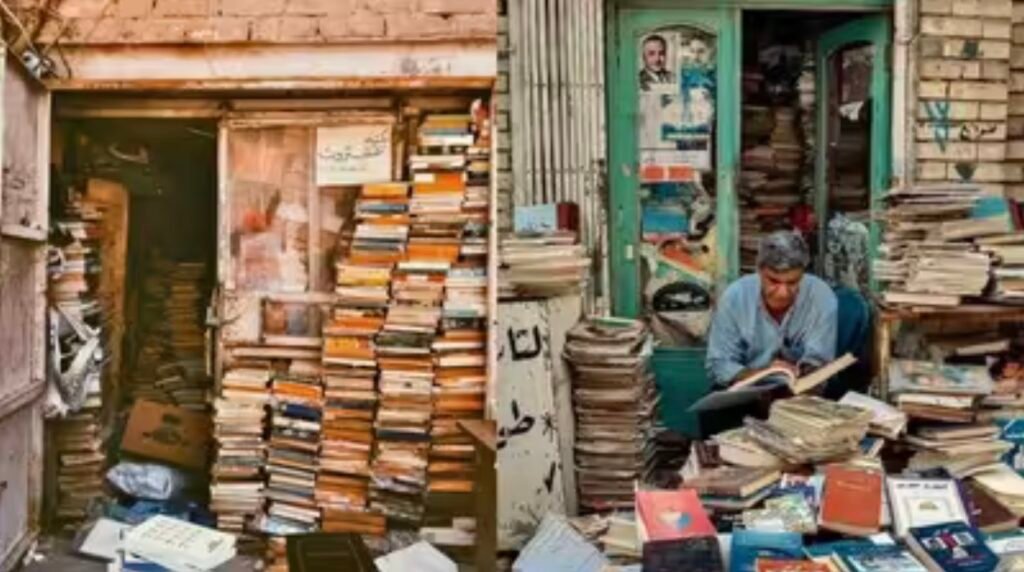
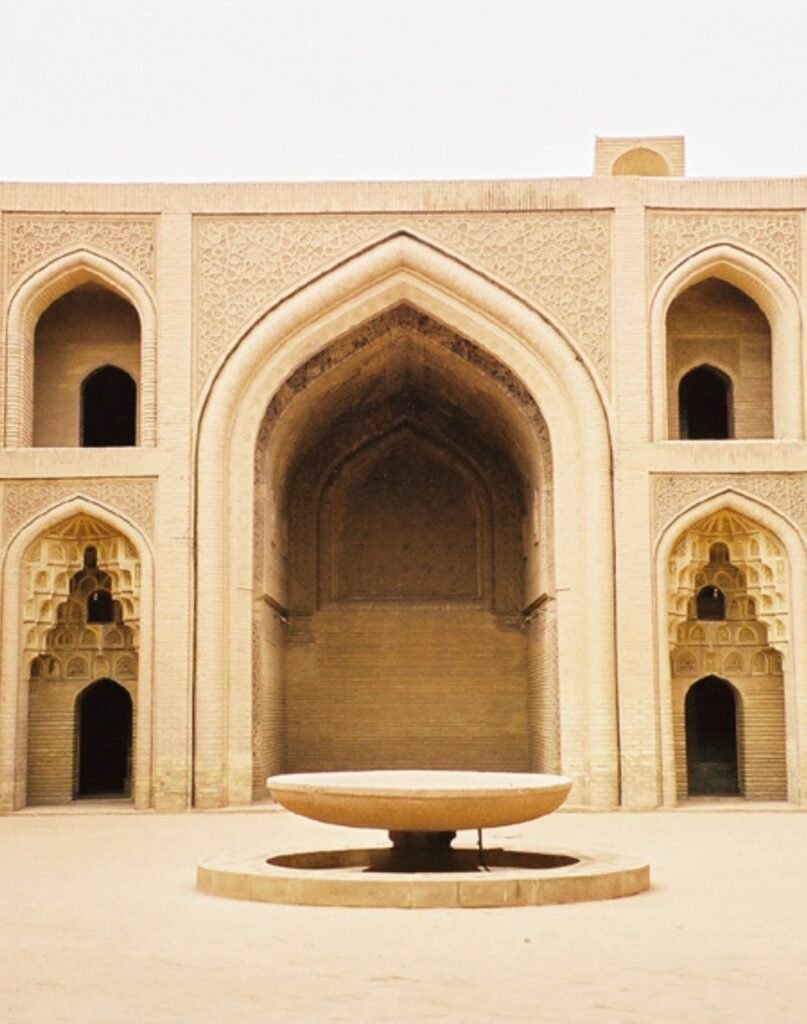
There are no remains of the House of Wisdom as the Mongols were not known to spare any place, whether it was a literary hub or not. Modern Baghdad doesn’t have an exact surviving site, but the historical quarters near Al-Mutanabbi Street along the Tigris are mentioned today as being the cultural site where the spirit of The House of Wisdom remains… Next to the Tigris River and the old Abbasid quarter, Al-Mutanabbi Street has been Baghdad’s beating heart of books, ideas and fiery debate for over a century. It was named after the 10th century poet al-Mutanabbi where Iraqis have flocked to buy, sell, & debate and fall in love with literature from philosophy, politics, to poetry, religion, banned books and bootlegged editions. If the work exists in Arabic, you will most likely find it. While The House of Wisdom no longer exists, the spirit of it remains on Al-Mutanabbi street.
“The thief does not read, and the reader does not steal.”
For Further Reading
For further reading on The House of Wisdom, here are the links to the articles I used to research and write this piece!
https://www.youngpioneertours.com/baghdad-house-of-wisdom/
https://www.islamicity.org/60008/baghdad-the-house-of-wisdom-bayt-al-hikmah/
https://www.britannica.com/place/Bayt-al-Hikmah