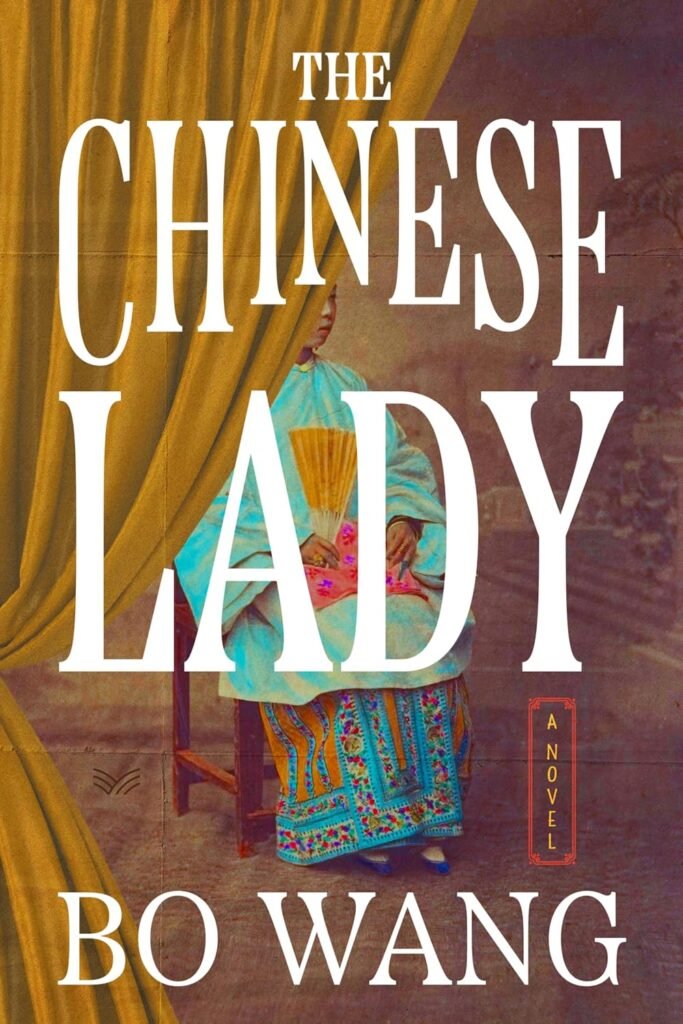
The Chinese Lady
The Chinese Lady
In 1834, American merchants bring a young Chinese girl to New
York as a live exhibit to promote the sale of Chinese imports. The young
Chinese girl has many names, Little Sparrow, Julia, Afong Moy, Madam Moy. Her
true name has been lost to history. The story goes from 1820s Canton China to a
captain and his wife Margaret, to P.T. Barnum’s American Museum to Gold Rush
San Francisco. We see Afong suffer trials and tribulations to eventually claim
her freedom and tell her own story.
Great Writing & Interesting Storytelling
The descriptions and the research, that Bo Wang had put into The
Chinese Lady, was excellent! The story is told 4 different ways. 3 of those
ways were done from other characters such as Little Sparrow/Afong’s mother,
Pearl and then from the captain’s wife Margaret to one of P.T. Barnum’s workers
Joyce who they claimed she was the oldest woman alive at 161. We then get
Little Sparrow’s story from her own point of view when she became Afong. While
you think with points of view from other people and then leaving Little
Sparrow’s story to the end wouldn’t work, it worked very well. My favorite
parts to read from the story were the mother, Pearl’s part and then Little
Sparrow at the end. I do enjoy the fact that Little Sparrow fought to control
her own destiny even if I didn’t agree with certain choices she made. The novel
called out doing good things just for the sake of feeling good and expecting to
be rewarded, rather than doing it because it truly was good. The very ending of
the novel is also another favorite part and I kind of hope for a sequel. Even
if there’s no sequel, regardless I can’t wait to read more of what Bo Wang
writes in the future!