
Newsletters
Q&A With Rebecca Wolf
New Information about Upcoming Book Related News
Q&A With Rebecca Wolf
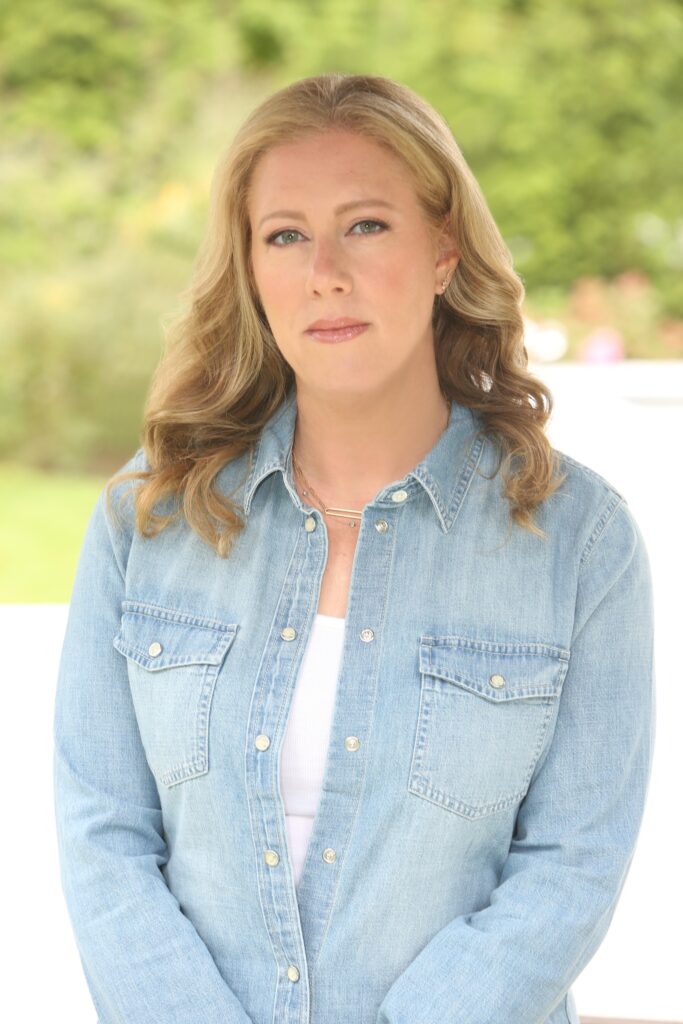
I have the honor of doing this interview with Rebecca Wolf a former journalist who released her debut novel this year titled Alive And Beating. Alive And Beating is available now, wherever you get your books!
Q: Rebecca, welcome to Book Notions! I’m glad that I read Alive And Beating. For those who haven’t read it, would you please give a brief description of the novel?
A: “Alive and Beating” follows six people from diverse backgrounds and neighborhoods in Jerusalem, all of whom are awaiting organ transplants, on the day that will forever change their lives. In a place where ancient divides often seem insurmountable, these characters — Leah, a Hasidic young woman; Yael, a daughter of Holocaust survivors; Hoda, a Palestinian hairdresser; David, an Iraqi restaurant owner; Severin, a Catholic priest; and Youssef and Yosef, two teenage boys whose fates are inextricably linked — are united despite their differences by a shared goal of being healthy and finding meaning in their lives.
Q: In the Authors Note, you wrote about how this story was inspired by your childhood friend Alisa Flatow and in April 1995 while she was on her way to a seaside hotel in Israel a cowardly suicide bomber rammed his car into her bus killing her and the other innocent passengers on board and himself. My condolences to what happened to Alisa. Was it painful writing Alive And Beating knowing the tragedy of losing Alisa was the inspiration behind it?
A: It was very sad, but at the same time cathartic, to write a story inspired by my friend Alisa. The only part of my book that is remotely factual is my initial bombing scene, because my character, like Alisa, is barely hurt, except for the one piece of shrapnel that severs her brain stem. Both are perfect organ donors.
I am proud to tell the world about Alisa’s family’s heroic decision to donate her organs. She was the first American tourist to be killed by an act of terror in Israel, and one of the first – if not the first – Orthodox Jews to donate her organs. It’s no exaggeration to say that her organ donation was the catalyst for change in the Jewish world, leading to a greater acceptance of the concept of brain death and ultimately more people donating their organs.
Q: Which scenes and characters did you enjoy writing? I liked reading all the characters and as a Catholic, liked that there was a Catholic priest there. Though two of my favorite stories were Leah’s and Hoda’s stories.
A: I loved writing about Severin, my Catholic priest, so I’m glad you liked it! The Pancreas chapter with Severin was the most fun to write because he is completely the opposite of me: I am not a man, nor a priest, nor Catholic. I also liked that he is such a positive person, despite having a very hard life. He is my only character whose organ transplant is not life-dependent, meaning he will not necessarily die if he doesn’t get one immediately. So it was less stressful writing his story.
The story of Youssef and Yosef, the two teenage boys in the Heart chapter, was the hardest for me to write. As a mother, it’s hard to imagine children so seriously ill. Because I set the story in the hospital, there was more medical jargon and technical details than the other chapters. I am lucky that my brother-in-law is a pediatric cardiologist, and he helped me make sure I was accurate in my writing.
My favorite character is Srulik, the taxi driver who weaves his way through all the different stories. Srulik is inspired by my cousin, who was also named Srulik. He just died in May at age 100. He was a Holocaust survivor who lost all of his family in the war except for his sister, and two cousins (one of whom was my grandmother). He was liberated from the Bergen-Belsen concentration camp and ultimately ended up in Israel, where he was given a gun upon arrival and told to fight in the War of Independence. He was a true pioneer of Israel and a believer in mankind. Despite the horrors he suffered, he genuinely liked people, and gave everyone a chance.
Q: What messages do you hope readers takeaway after reading Alive And Beating? For me it is a reminder that at the end of the day with all our differences, what unites us is everything that makes us human, our dreams, our difficulties and everything in between.
A: Thank you for taking that away as a message, because I would say that is the main point of my book. It’s not always easy to understand someone else’s perspective, but we can always try to recognize if someone is hurting, and if we acknowledge that pain we are reminded that we are all human beings. I think in general this message comes across in a hospital setting, particularly with patients who are seriously ill. Wearing a paper gown open in the back brings a person to the height of vulnerability, and it’s hard not to see that person as a human being when bared so visibly. When people are fighting for their lives, nothing else seems important.
Q: I know in messenger we briefly discussed how different book 2 is from Alive And Beating. Can you give anymore details?
A: I’m actually working on both a short story and a new book. My short story is about a 12-year-old girl who is the sole witness of a murder, but she sees it from the 15th floor of her apartment building.
The book is a dual timeline book about two women: one, in the 1970s, is a girlfriend of a terrorist who wants to bomb a plane; the other, in present time, is a lawyer researching the bombing of a plane that killed her fiancée.
I’m interested in writing about terrorism because I believe most people are good, and it’s hard for me to understand how someone could be violent towards anyone, let alone innocent people.
Q: You used to be a journalist before becoming an author. Is it a fair assumption that being a journalist helped with writing Alive And Beating?
A: Being a journalist definitely helped me to write “Alive and Beating,” because I was comfortable with the process of writing. What I was uncomfortable with was using my imagination to create a story. I often discussed the plot with my family at the dinner table and I kept asking them, “What happens next?” A lot of the elements of my book are true stories “ripped from the headlines.” For example, the story about the female soldier who is a shooting instructor and has a rogue trainee was lifted from an Israeli newspaper.
As a journalist, I also like the idea of teaching through writing. While my book is fiction, I hope that readers will come away with knowledge about the diversity of Jerusalem, the complications of organ donation, and the difficulty of living with a serious illness.
