Q&A With N. Koster
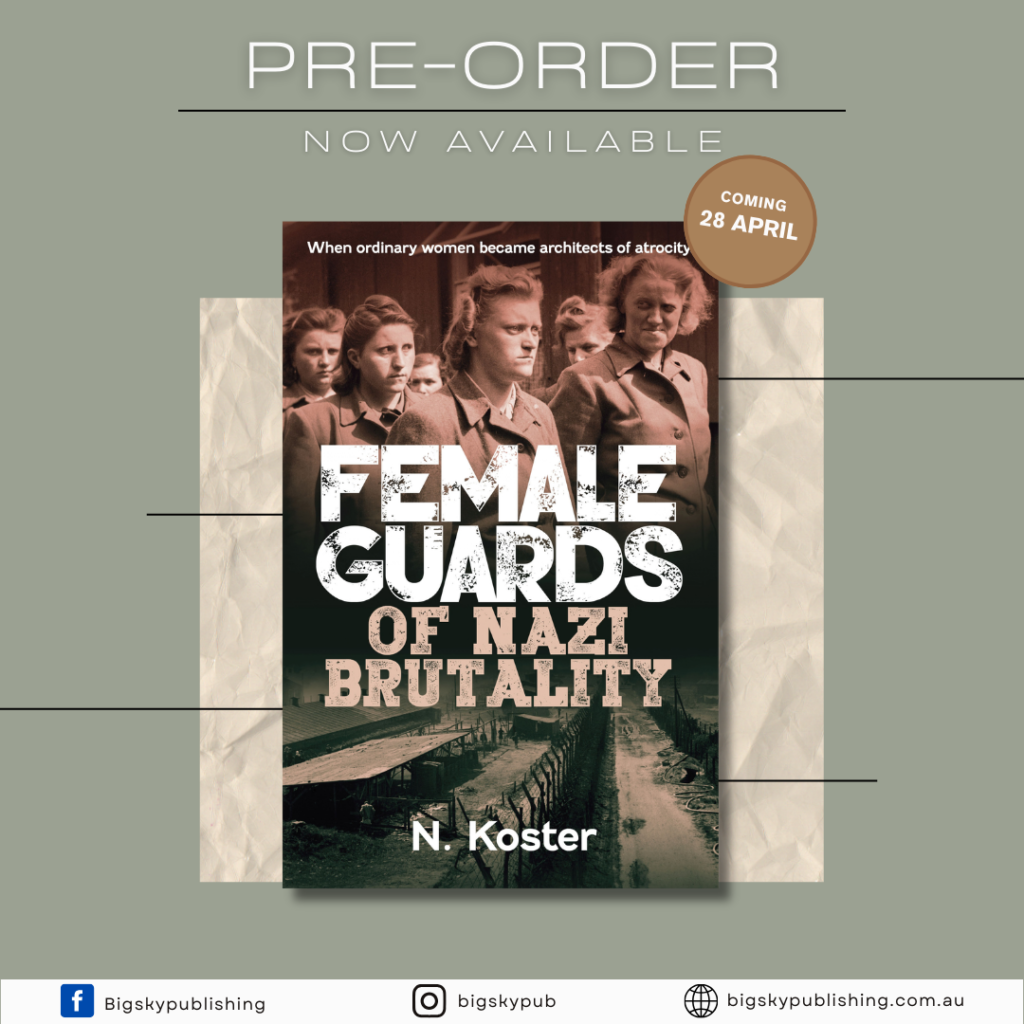
I’m delighted to be doing this Q&A with Nancy Koster, whose debut historical nonfiction book, Female Guards of Nazi Brutality will be available today on April 28th! My birthday is a day later on the 29th! Female Guards of Nazi Brutality will be published under the name of N. Koster.
Q: Welcome to Book Notions! First of all, I commend you on writing a nonfiction book about female Nazis. Many people only think of nazis as men but there were women guards and doctors there that were just as ruthless perhaps more so than the men. What made you want to write a nonfiction book about female Nazi guards?
A: Thank you so much for having me. I wanted to write about female Nazi guards because history often simplifies the story of the Holocaust by focusing mainly on male perpetrators. While that is understandable, it leaves out an important and uncomfortable truth: women also played active roles in the Nazi system. I felt it was important to examine how ordinary women became involved in such brutality, not to sensationalize it, but to better understand how ideology, power, and circumstance can shape human behavior. By telling these stories, I hope readers gain a fuller, more honest picture of history and reflect on the moral choices individuals make within oppressive systems. With the conflicts and wars we continue to see in the world today, it also feels especially important to revisit these histories and think about the lessons they hold for our present.
Q: How long did it take you to research and write Female Guards of Nazi Brutality?
A: I am a historian, and the idea for Female Guards of Nazi Brutality actually began during my history studies at university, where I first started researching the role of women in the Nazi system. What began as an academic interest gradually grew into a much larger research project. In total, the research and writing took several years, as I spent a great deal of time studying historical records, survivor testimonies, and archival materials to ensure the book was accurate and respectful to the history it explores.
Q: Was there a time you had to take a step back from researching and writing Female Guards of Nazi Brutality due to the dark subject matter? Did you also feel yourself going into a research rabbit hole?
A: Yes, there were certainly moments when I had to step back. The subject matter is extremely heavy, and spending long periods reading testimonies and historical records about such cruelty can be emotionally difficult. Taking short breaks helped me process what I was learning and return to the work with the care and focus it deserved. And like many historians, I did occasionally find myself going down research rabbit holes—coming across new documents or references that led to even more sources. While it can slow the writing process, those moments often deepen the research and help create a more complete and accurate picture of the history.
Q: What lessons and reminders do you hope readers remember and learn once they finish reading Female Guards of Nazi Brutality?
A: I hope readers come away with a deeper understanding that atrocities like those committed under the Nazi regime were not carried out by only a few individuals, but by a system that involved many people, including women whose roles are often overlooked. One important reminder is how powerful ideology, propaganda, and social pressure can be in shaping people’s actions. At the same time, I hope the book encourages readers to reflect on the importance of moral responsibility, critical thinking, and standing against injustice—lessons that remain very relevant today.
Q: Can you reveal details for your next book or is it too early to discuss? If you decide to write a book about Nazi Doctors for instance, other than the infamous Joseph Mengele, another doctor you might be interested in focusing on, would be Herta Oberheuser. Herta was a real life female doctor at Ravensbrück Concentration Camp. I read about her in Martha Hall Kelly’s book The Lilac Girls.
A: It’s a little early to share too many details, but I can say that I’m currently planning another nonfiction project that will continue exploring lesser-known aspects of history. I’m particularly interested in examining individuals and roles that are often overlooked in mainstream narratives. At the same time, I’m also working on a fiction project, which will allow me to approach history from a different perspective and explore the human experiences behind it in a more narrative way.
Q: Have you seen the new movie Nuremberg that had Russel Crowe portraying Nazi Herman Goring, & what was your opinion if you had seen it? I won’t spoil anything big, just that Russel Crowe did an impressive German accent, and he knows how to portray villains well.
A: Yes, I have seen it. I think films like Nuremberg are very important because they bring historical events to a wider audience. While movies are, of course, a form of storytelling and entertainment, they can also raise awareness and encourage people to learn more about the real history behind what they see on screen. When done thoughtfully, they can spark important conversations and inspire viewers to explore the past more deeply.
You can follow N. Koster on her Instagram account by clicking this link!
https://www.instagram.com/author.nkoster/