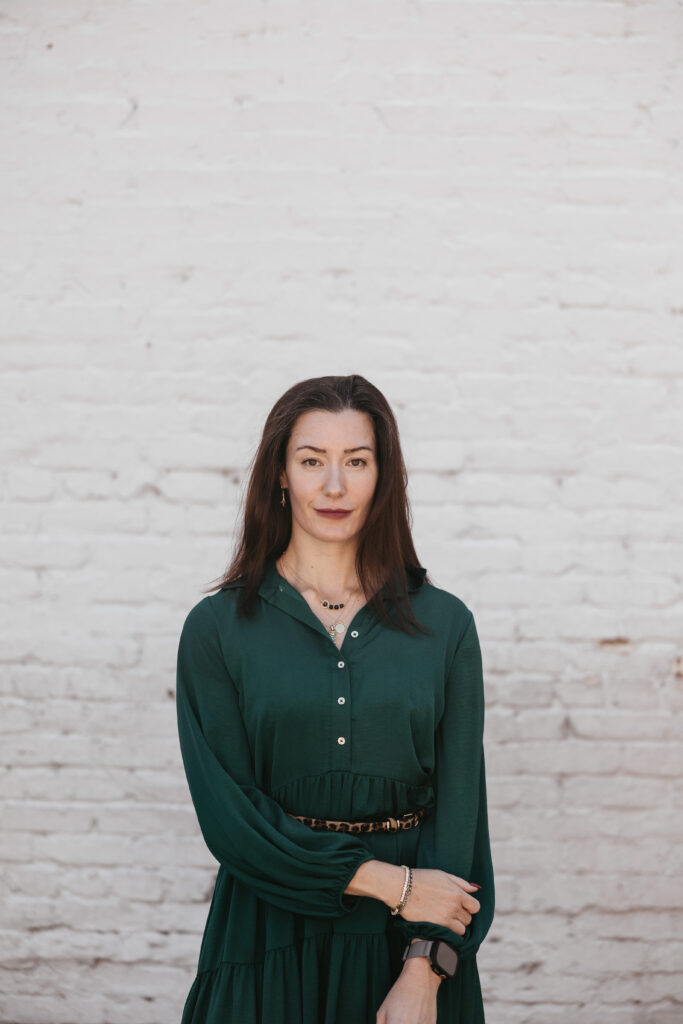
Q&A With Jessica Berg
I’m so excited about this Q&A with literary agent and contributing editor at Writers Digest Jessica Berg! Jessica has guided authors throughout every stage of their writing journey. Some of Jessica’s clients include Lisa Roe, Trisha Blanchet, Tahverlee Anglen, Zach Powers, ZS Diamanti, Katia Sinchenko, Vincent Zandri, & Arizona Bell.
Q: Jessica, welcome to Book Notions! Where did your passion for literature come from and what drew you into being a literary agent?
A: My passion for literature stretches all the way back to childhood. I was absolutely the shy girl reading books all the time because they were a safe way for me to begin to understand the world. As I grew up, my love for reading, writing, and all things books only continued to grow. For a while there, I thought I’d earn a PhD and be that weird lady with too many books and too many cats, but life had other plans in mind.
I spent a decade as a developmental editor after earning my MFA from Spalding University. While I loved the intimate relationships I was able to build with my clients, I kept finding myself wanting to do more for them. I wanted to be in their corner on the page and to help make their larger dreams come true. Agenting felt like the natural next step. I get to use everything I learned as an editor to help writers shape their work, and then actually fight for that work in the marketplace. That combination is where I really come alive.
Q: I know a literary agent is a person who helps an author secure a publishing deal for their book and submits their manuscript to editors at publishing houses where they have relationships and where they feel their book would be a good fit for an editor’s list. What is your favorite part about being an agent and why?
A: My favorite part about being an agent is seeing a client’s book out in the world. What I mean by that is there’s this moment when a manuscript goes from something only a handful of people have read to something a stranger picks up at an airport, or recommends to their book club, or cries over on their couch at midnight. That journey, from a writer’s first draft to a real book on a real shelf, is something I get to be part of. And I never take that lightly. Every single book is someone’s years of work and courage and getting to help carry it into the world is a privilege, an honor, and honestly the best job in the world.
I also want to note that none of what I do happens in a vacuum. I have an incredible team at Rosecliff who are all working toward the same goals. Our agents are people who show up with the same passion for writers and the same belief in what good representation can do for a career. That matters more than I can say.
And beyond my own agency, I have peers, mentors, and colleagues I lean on when the industry feels heavy, and who I get to celebrate with when something wonderful happens. Publishing can be isolating if you let it be, but it doesn’t have to be. I’m constantly amazed at the people in my orbit who I admired long before I ever had a seat at this table. They make me a better human, friend, and literary agent and that’s not something I take for granted. The community is the job, as much as anything else and I think that’s worth saying out loud.
Q: I enjoy this next question because I love knowing about someone’s personal journey into being an agent, publicist, author or any role in the publishing world is different. Did you apply for a job right after graduating high school or did you go to college?
A: I went to college first because back in those days, a clear path to this industry wasn’t clear if you weren’t living in New York or you already had an in with the publishing world. In retrospect, I’m glad my career unfolded the way it did because it provided me the opportunity to really understand the writer’s experience from the inside out. Spending years as a developmental editor before stepping into agenting means I’ve got a deep foundation in craft and that knowledge informs everything I do as an agent now. When I sign a client, I’m not just evaluating whether a book is marketable to a wider audience. I understand the bones of it, and I know how to help a writer get it there.
Q: What advice would you give to aspiring authors on what they would need to do to get you as their agent?
A: First, make it easy for me to say yes. That means know what I’m looking for during any given season. I tend to open to submissions quarterly, and each time I do, my MWSL is just a bit different. To put that in concrete terms, this year I’m looking for all things horror. My Q1 wishlist included stories that feel emotionally specific and impossible to stop turning pages on. Q2 is probably going to look a little different. I do my best to talk about my MSWL on my social media and newsletter, so authors always know what I’m hoping to find.
Beyond the project, I like to see a strong query letter and a synopsis that makes sense. The authors that really get my attention also understand that writing is just a fraction of this job. If you’re serious about pursuing traditional publishing, that means doing all you can to make it easy for future readers to find you.
Q: How long have you been a literary agent for? In your opinion, what are important skills someone needs if they want a career as a literary agent?
A: I’m about two and a half years into agenting, which somehow doesn’t feel possible and absolutely feels possible. As for skills, literary agents need a strong editorial eye, lots of business savvy, and genuinely thick skin. This industry runs on relationships, so being a clear communicator and a trustworthy advocate for your clients matters more than almost anything. You also need to be able to hold a lot of moving pieces at once: submissions, negotiations, contracts, client management. So much of this about loving books, but there are a lot of tasks/roles that agents take on outside of simply loving the manuscript.
Q: This next question is my favorite as I know you’ve represented several authors, some of whom are Lisa Roe, Trisha Blanchet, Tahverlee Anglen, Zach Powers, ZS Diamanti, Katia Sinchenko, Vincent Zandri, & Arizona Bell. Would you please name other authors you’ve worked with? What’s it like representing so many interesting people?
A: This is the majority of my list right now, but I can add Christa Innis, David Darling, and Violet Castro. All three of those authors write in such different spaces, so being able to have my hands in their projects at the same time is so much fun! I’ll also add here that I intentionally keep my list small because I’m also the Agency Director of Rosecliff, which means on any given day, I’m wearing three or more hats (sometimes at the same time!).
Q: If you were to become an author yourself, would you write fiction or nonfiction & why?
A: I am an author! I cut my teeth in the literary fiction/small fiction space and have a ton of work published in lit mags and journals. I also published two chapbooks of poetry. Currently, I’m not working on any fiction but I do have a fun idea for a nonfiction project that won’t leave me alone. There are such different skills needed for each type of writing, and I like being able to exercise my muscles and try for all of them. Eventually, I’ll make my way back to historical fiction because that tends to be where my fiction brain hovers.
Q: What’s it like being a contributing editor to Writers Digest? How do you juggle your career as an agent and being a contributing editor to Writers Digest?
A: I’m incredibly proud to be a Contributing Editor to Writer’s Digest. The magazine has its roots in my hometown, and I grew up reading it. It shaped my understanding of the industry, of craft, and of what it means to be a good literary citizen. Now, having the opportunity to do the same for up-and-coming authors is something I don’t take lightly. It feels like a full-circle moment I couldn’t have planned if I tried.
As for juggling both: they feed each other more than they compete. What I mean by that is everything I do as an agent informs what I write about for Writer’s Digest, and everything I write about keeps me sharp and connected to what writers actually need to know. The questions my clients ask, the patterns I see in the wider industry, the mistakes I watch writers make over and over all help inform the articles I write. I think of it less as two separate jobs so much as two expressions of the same mission: helping writers understand this industry and feel like they belong in it.
Q: If you were able to time travel, what would you tell your younger self when you first started out in the publishing world as an agent?
A: I’d tell her to trust the slow build. When you’re new to this industry, it can feel like everyone else has a head start and you’re always catching up. But the relationships you’re building, the clients you’re learning alongside, the mistakes you’re making are all part of the foundation to what is, hopefully, a long career. I’d also tell her that saying no to the wrong things is just as important as saying yes to the right ones. Your list is a reflection of you, and protecting it matters. And maybe most importantly, stop waiting until you feel ready. You learn this job by doing it, and you were always more prepared than you thought.
Q: Would you please post your social media accounts so the readers of the blog and I may follow you and your work?
A: Sure thing! I hang out online at @jessica__berg on Instagram and readers can sign up for my newsletter, Secrets & Slush, here.