Newsletters
Q&A With Jerome Charyn
New Information about Upcoming Book Related News
Q&A With Jerome Charyn
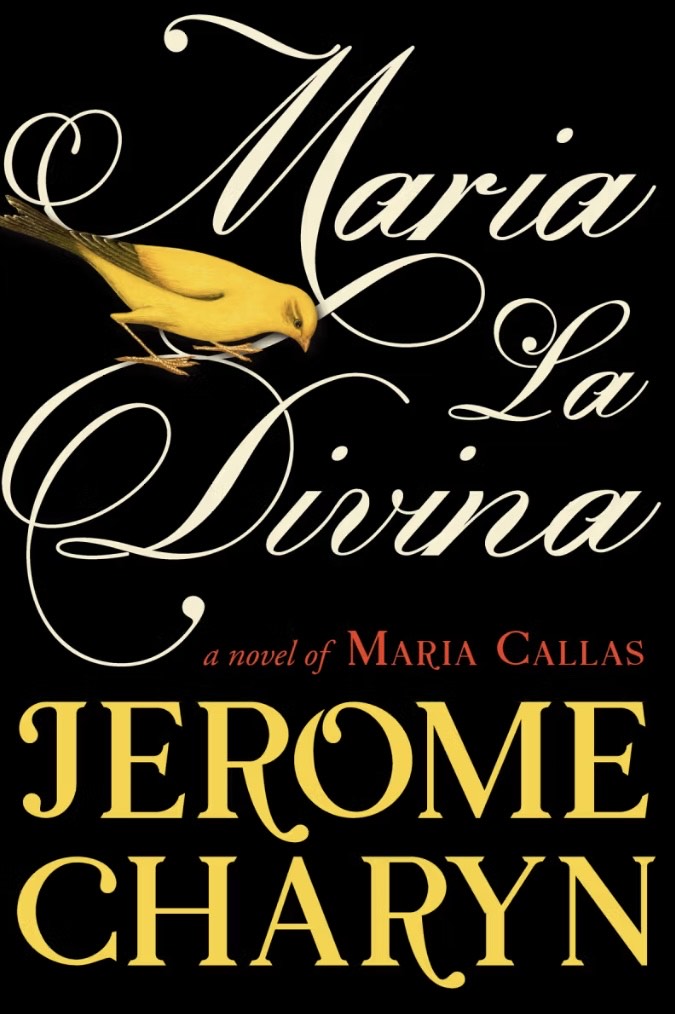
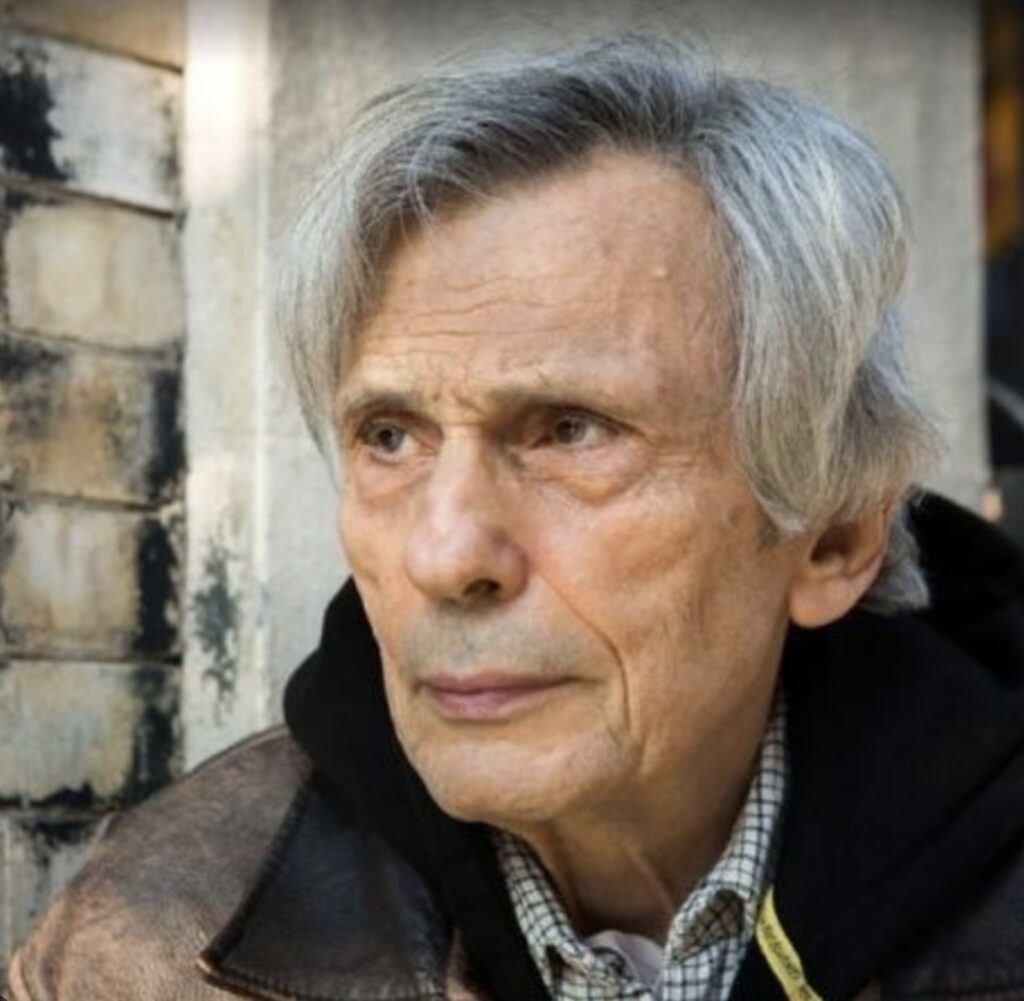
Another author I’m delighted to interview is Jerome Charyn who’s the author of several novels. Some of which are, The Secret Life Of Emily Dickinson, I Am Abraham & his new book Maria La Divina which came out last week and is available wherever you get your books!
Q: Welcome to Book Notions Jerome! Would you please give brief descriptions of each of your books beginning with Maria La Divina about Maria Callas?
Next Book (March 2026, Seven Stories Press)
Writing about all my books would be a herculean task and I don’t feel like Hercules today, so I will tell you about my next book, which is my very first Young Adult novel. It’s called Silver Wolves and it is really a story of my family in disguise. I, of course, am the main character of the novel, but I was able to include my older brother who really saved my life. I won’t talk about my parents because it would make me too unhappy, but I do recreate my parents in an idealized form, even though my father in the novel is mentally disturbed and hospitalized. But I really did see a silver wolf in the Bronx when I was a child. My older brother, whom I loved, fed the wolf, and when the wolf looked into his eyes, it felt to me that she was more human than human.
New Book (Maria La Divina)
My new book is about Maria Callas, called La Divina, the greatest diva who ever lived. Unlike most other opera singers, she came from a poor background. She first studied in Greece and was an outcast when she tried to sing at Italian opera houses. But through sheer will and the power and range of her voice, she broke through that invisible wall and sang at La Scala. She would also sing at the Metropolitan Opera in Manhattan.
She fell in love with Greek shipping magnate Aristotle Onassis, who would later abandon her and marry Jacqueline Kennedy. La Divina lived in isolation in Paris after her singing career ended. She would offer a mythic masterclass at Julliard that is still talked about. She lost her voice and died unloved and alone in a spacious Paris apartment that was more like an opulent mausoleum.
This is the first novel to tell the story of the real Maria.
Q: Normally how long does it take you to write a book and what made you choose Maria Callas as the topic of your current book?
A: One evening, I happened to watch a documentary called Maria by Callas about Maria Callas. The only thing I knew about her was that she had an affair with Aristotle Onassis, and Onassis dropped her and married Jackie Kennedy. I didn’t know very much about opera, but I sort of fell in love with her, and more importantly, I felt that I was Maria Callas.
Callas had been born poor, as I was. She didn’t come from a family of opera aficionados. She had to learn opera on her own in a way – and I, who didn’t have a language as a child and had to discover English on my own, felt as if I were writing her operas, you know, writing a novel in operatic form, because music is also so important to me.
As usual, when I deal with historical figures like Lincoln or Emily Dickinson, I read whatever I can, but I’m not so much looking for facts, I’m looking for images, I’m looking for incidents, I’m looking for details that no one else would be looking for. It’s like diving under the sea.
The jewel that I found was a book by a Greek historian who wrote about her life in Greece and about her childhood, because you don’t find it in many biographies, and I learned how she came to study with Madame Hidalgo, who really taught her how to sing. So, I studied as hard as I could; I studied librettos, I listened to operas. I became more and more involved with Maria, and I became Maria.
Q: There was a movie on Netflix and in theaters about Maria Callas. What did you think of Angelina Jolie’s performance as Maria? If Hollywood were to give you the rights to her story, who would you choose to play Maria Callas?
I have no quarrel with Angelina Jolie as Maria. I am sure she fulfilled the director’s vision on the screen. And directors are the gods of their own films.
However, the woman I saw on the screen was NOT the Maria I know and adore. It was a pale replica without Maria Callas’s power and humor.
I would love to write the screenplay for a film about Maria in my novel. I’ve had one of my books turned into a TV movie and it was not a great experience. I handed over my book to a showrunner and lost all my power.
But with my own MARIA LA DIVINA film I would not make the same mistake. I want my Maria to sing, to act, to be a strong powerful woman worthy of the name Greatest Diva of All Time.
So, the first star I want my producers to talk to is – The Lady herself, LADY GAGA. Even though Lada Gaga isn’t an opera singer, she has a certain power, a certain charisma that reminds me of Maria. And if I were to make a film or a stage play about Maria Callas, I would choose Lady Gaga, because she would have the power and even the sadness to play Maria – because Maria was very very sad.
Lady Gaga is everything Maria Callas was in her prime – the greatest singer, a talented actress, an exotic beauty and fashion icon, with a genius understanding of her times.
Q: Can you talk about the book you are currently writing right now?
I am writing a book titled Digger Welles, about a boy who lives in a hotel in the Bronx. His father is a swindler and has abandoned him. He grows up in the hotel, becomes a gangster and a billionaire and retells the story of his life. I grew up in these same streets and they remain as vivid to me as when I traversed them over 80 years ago.
Q: Does it feel surreal that you’ve written over fifty novels over fifty years? I think that’s quite impressive.
A: I don’t like the idea of numbers. If I wrote 50 novels it’s because I had 50 stories to tell. If I had only one story I would have told it and remained silent, but as you can see, I am still singing.
Q: Do you prefer writing fiction or nonfiction? Why?
A: I love the music of the sentence and sometimes those sentences appear in my novels, and sometimes they appear when I write about Joe DiMaggio or Isaac Babel. I don’t see any difference between fiction and non-fiction. I see and feel the music. The sound means everything to me. And I’m as proud of my biography of Joe DiMaggio as I’m proud of my novel about Emily Dickinson.
Q: What lessons and emotions do you hope readers take away from your writing & why?
A: When I do a novel about someone who existed, like Lincoln or Emily Dickinson or Maria Callas, I do it in a way that is not really . . . you know, a novel. I assume the reader’s role, so that if you read Maria La Divina, you’re going to know Maria Callas, you’re going to feel Maria Callas, you’re going to fall in love with Maria Callas, and you’re going to cry with Maria Callas.
And my one objective, and I only have one, when I do these books, is to break the reader’s hearts.