Newsletters
Q&A With Jay Neugeboren
New Information about Upcoming Book Related News
Q&A With Jay Neugeboren
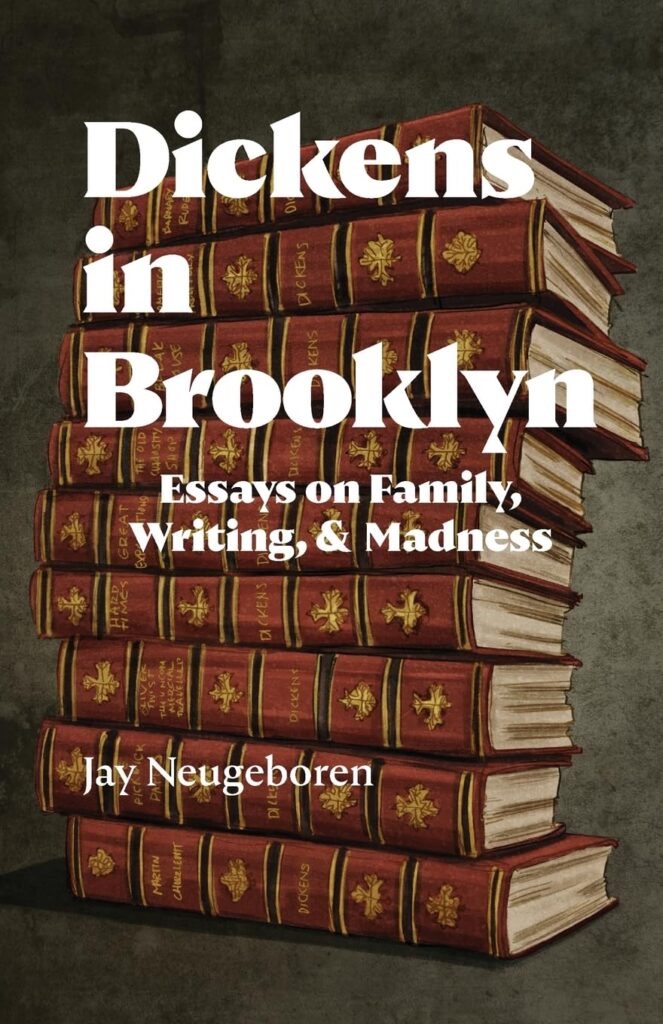
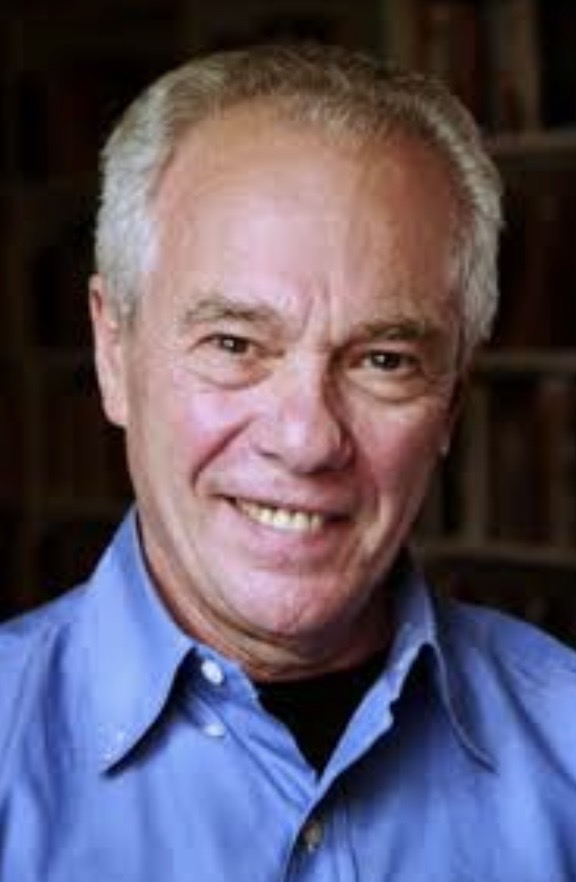
Rachel Tarlow Gul was kind enough to connect me with author and essayist, Jay Neugenboren. Jay has written over 25 books many are novels and some nonfiction and even four collections of short stories. Some of Jay’s work is The Stolen Jew, Before My Life Began The American Sun, Imagining Robert, Transforming Madness, Whatever Happened to Frankie King. Many of Jay’s stories and essays appeared in The New York Review of Books, The Atlantic, Ploughshares The American Scholar, GQ, Hadassah, The New York Times, & The Wallstreet Journal. Jay’s new release coming out on April 28th is Dickens in Brooklyn Essays on Family, Writing, & Madness.
Q: Jay welcome to Book Notions! Would you please give a brief description of your work beginning with Dickens in Brooklyn?
A: Thanks, Bianca for the invitation and your opening question . . . but let’s begin at the beginning, okay? After writing 8 unpublished books, starting when I was 18 years old, I published my first novel, Big Man, with Houghton Mifflin, in 1966, when I was 28. Since then, in addition to a dozen novels and four short story collections, I’ve had two screenplays produced and have written many nonfiction books. Dickens in Brooklyn is a collection of personal essays, most of which were published in recent years, but includes a few that go back several decades.
Q: Dickens in Brooklyn is an essay collection that isn’t written in a linear timeline like a normal memoir or autobiography would be. What made you want to cover family and writing in this specific essay collection?
A: I selected essays about family and writing because they are central to my life—to my relationships with my family, and to my writing career—and because of what my family went through (especially with respect to my brother Robert’s lifelong breakdowns and hospitalizations due to his psychiatric condition), I thought readers would relate to our experience as a family, and to my career—struggles and successes—as a writer.
Q: How long did it take you to write Dickens in Brooklyn?
A: The essays were written over a period of about 30 years, but most were written in the last decade. A few—“Meanwhile Back on the Ward,” for example, which became the opening chapter of Imagining Robert—wound up as parts of nonfiction books I’ve written (and am now writing).
Q: Which parts of your life did you enjoy covering in Dickens in Brooklyn & which parts were hard to write about after a certain amount of time? Some of my favorite parts you covered in this essay collection are about your cousin Manya surviving Auschwitz and how you wrote even when your parents weren’t supportive.
A: What was difficult was not writing about my family’s difficulties, or my brother’s mental illness, or my struggles as a writer, or my cousin’s years in Auschwitz, but coming to the decision to write about these things. I had to consider if what I wrote might hurt some people or might be better left unsaid. But once I said, yes, I’m going to do it—the rest was simply (simply?!) making sure that what I wrote was as vivid, clear, and true as I could make it. I revise endlessly (though I hope it doesn’t show and seems to flow as if it all came out just the way it is on my first draft), and I often had to do considerable homework—research—to make sure that dates, places, events, took place when and how I remembered them.
Q: For future writers out there, what is your advice for them if they want a career in this profession?
A: I would suggest they take the advice I took from Flannery O’Connor – that “routine is a condition of survival.” You might be able to write one poem, or one story, or even one novel on inspiration, but to have a career as a writer, it’s the seat of the pants to the seat of the chair in some regular way. And you turn off the phone, and don’t pay bills, or respond to emails, and even if you get nothing done on a single day, several days, or a month, you keep to your routine because you don’t want to be gone on the one day that the Muse decides to visit.
Q: How does it feel knowing that you’ve written over 25 books both fiction and nonfiction and that your short stories and essays have appeared in famous publications such as The New York Review of Books, The Atlantic, Ploughshares The American Scholar, GQ, Hadassah, The New York Times, & The Wallstreet Journal?
A: It feels wonderful . . . and a bit unreal. When I started out, I hoped I might publish in such places but feared it would never happen. More—as with The New York Review of Books and The American Scholar (and others)—these seemed, and still seem, to be like teams I used to think they’d never even let me try out for . . .
Q: Are you writing fiction, nonfiction, a collection of short stories and essays or a combination of all of the above?
A: I’m now at work on new fiction, and new nonfiction—long form and short form. Sometimes I work on fiction in the morning, and on nonfiction in the afternoon. When I’m working on a screenplay, though, I tend to put all other writing aside and work on the screenplay nonstop—as many days (and nights) as it takes until I get a good draft done.