Newsletters
Q&A With Douglas Century
New Information about Upcoming Book Related News
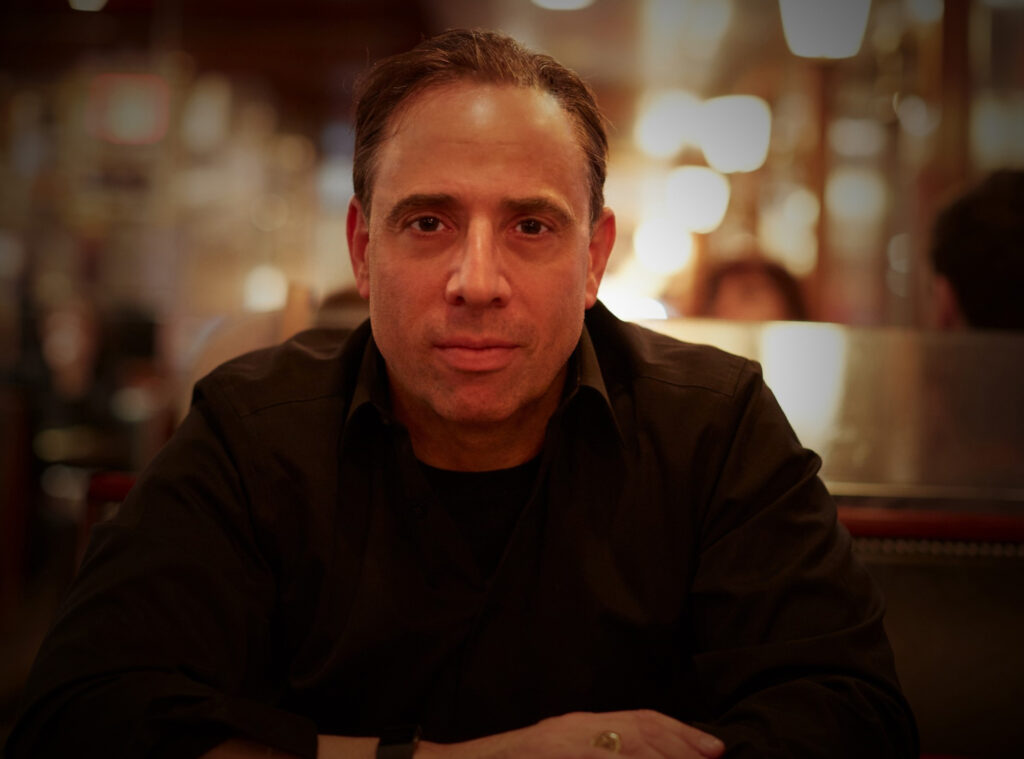
Q&A With Douglas Century
I’m excited to be doing this Q&A with New York Times
Bestselling Nonfiction author and investigative reporter, Douglas Century. Some
of Douglas’s many works are Hunting El Chapo, The Last Boss of Brighton &
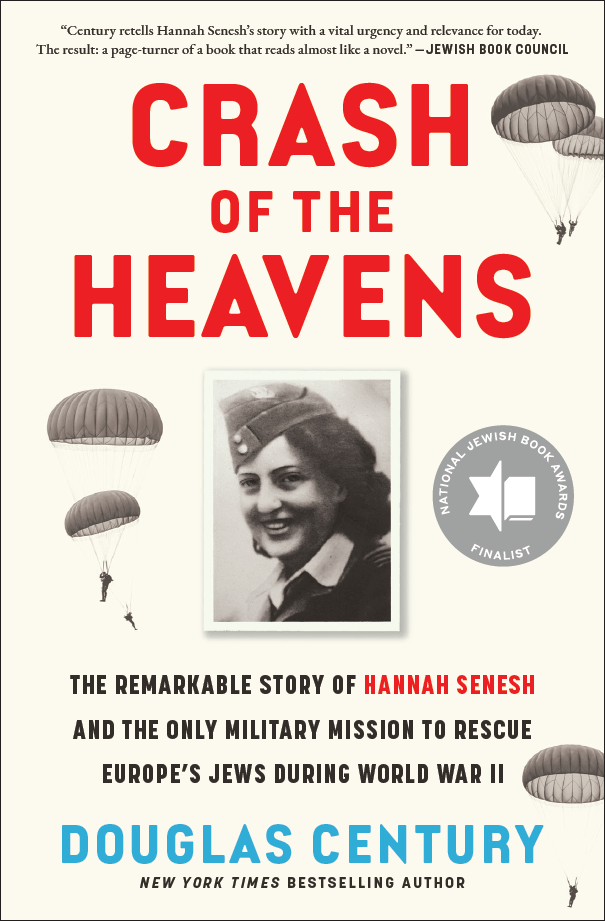
Crash of the Heavens which is available now wherever you get your
books!
Q: Douglas, would you please give a brief
description of each of your books beginning with Crash of the Heavens?
A: Sure, Bianca. Thanks for interviewing me.
Crash of
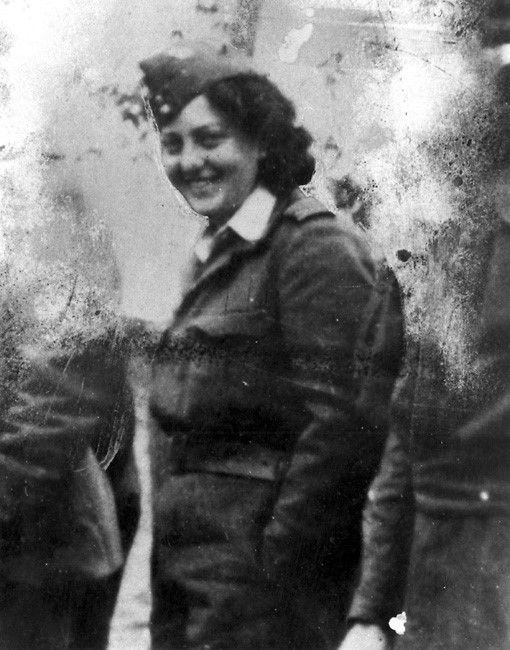
the Heavens is the story of a brilliant
young Hungarian-born poet and paratrooper named Hannah Senesh and the role she
played in World War II—she was a volunteer paratrooper and part of only
military mission in the Second World War to save the Jews of Europe. I tried to
write it in the style of a nonfiction thriller—a ticking clock pacing—about
Hannah and the group of Jewish volunteers who parachuted behind the lines
Nazi-occupied Europe on a high-stakes British military mission.
The Last
Boss of Brighton is the stranger-than-fiction story
of Boris “Biba” Nayfeld, a notorious mobster who rose from being a penniless
orphan in the Soviet Union, right after World War II, to being a
multimillionaire gangster in New York—and now the last-man-standing of all the
old-school Russian mob bosses in America. The guy survived the brutal Soviet
labor camp system, three stints in U.S. prisons. The action takes you from the
late 1940s to the present—from the USSR to Belgium, Germany, West Africa,
Thailand, and of course America, and you’ll read about multibillion-dollar
gasoline scams and international heroin trafficking—it’s a firsthand look at
the brutal code that governs the Russian underworld.
Hunting El
Chapo tells the story of the unprecedented eight-year manhunt for
the world’s most elusive drug lord, Joaquín Guzmán a.k.a. El Chapo. I wrote it
with former DEA Special agent Andrew Hogan. Drew led the capture operation—he
was stationed down in Mexico City for years—and the way the story is told, we
focus on the sophisticated technological surveillance and elite military raids
that Drew led, along with his partner from Homeland Security Investigations—and
which resulted in El Chapo’s capture. We structured it kind of like that Gary
Cooper Western High Noon. It’s
mano a mano—a game of cat and mouse—a couple of U.S. federal agents in the
mountains of Sinaloa trying catch the “most-wanted outlaw in the world.”
Barney
Ross: The Life of a Jewish Fighter. A short
biography, in which I tell the life story Dov-Ber Rasofsky a.k.a. Barney Ross. Takes
you from the time Barney witnessed his dad being murdered in a botched holdup
in Chicago when he was thirteen—then he becomes a street tough, a messenger-boy
for Al Capone, a Golden Gloves champ, and ultimately a legendary
triple-division boxing champion of the world. After a long reign as
welterweight champ, he retires from the ring, and right after the attack on
Pearl Habor, he enlists in the U.S. Marine Corps, sent into the horrific Battle
of Guadalcanal and becomes a highly decorated WWII hero. And then—well,
let’s just say there are a lot more twists in the tale.
No
Surrender. A World War II book that I wrote
with Pastor Chris Edmonds from Knoxville, Tennessee. Kind of a detective story—how
Chris discovers, by chance, that his long-deceased father, Master Sergeant
Roddie Edmonds, was a veritable war hero. While reading an article in the New
York Times, Chris learns that in January 1945, his dad made an act of
extraordinarily courageous stand against Nazi orders at a POW camp in Nazi
Germany. Roddie was threatened by the German commandant at Stalag IX-A who’d
ordered a segregation of American soldiers by religion: the commandant demanded
that only the Jewish soldiers fall out for rollcall at 6 AM. But Roddie ordered
all 1,200 American soldiers to fall out. With the Luger pistol of this
S.S. Major pointed at his head, Edmonds said: “We are all Jews
here.” That act saved more than 200 Jewish-American GIs. Truly amazing
story.
In fact, the story’s been in the news lately. Chris sent me an
invitation to the White House a few weeks back. On March 2, 2026, Master
Sergeant Roddie Edmonds was posthumously awarded the Congressional
Medal of Honor.
That’s a few of my books. You can find more info on my author’s website. Or go to
my author’s
page on GoodReads or on Amazon.com.
Q: How long did it take you to research Hannah
Senesh’s story for Crash of the Heavens?
A: Depends on how you define research. I
first learned about Hannah when I was eight years old at a Jewish day school in
Canada. Our school principal was a Holocaust survivor, he’d lived through the
Nazi terror as a boy in Poland, and in class he would tell us the story of
Hannah’s courage: her refusal to give up her secret British radio codes despite
months of horrific physical and psychological torture at the hands of the
Gestapo.
She wouldn’t betray her people by informing—no matter what they
did to her. She was sentenced to execution by firing squad when she was 23
years old.
Who could understand the concept of martyrdom at the age
of eight? Certainly not me. But I did understand that this brave young woman
went to her death and wouldn’t ask for clemency. “I don’t beg for mercy from
hangmen and murderers.” Those were exact her exact words.
She refused to even wear a blindfold as she faced the firing
squad daring the Hungarian soldiers to look her in the eyes as shot.
To hear that story at age eight—well, it was amazing.
It was also terrifying.
Clearly! I mean, it’s haunted me since childhood in the
mid-1970s. In university, I wrote a few essays about Hannah Senesh. Flash
forward to 2021, which was the centenary of Hannah’s birth—she was born in
Budapest July 17, 1921—and I told my literary
agent at CAA: “I should write a book about the Hannah Senesh and her
mission.”
So I pitched my agent, he liked the idea, and I started some
very in-depth research. I started to write lengthy proposal, then we signed a
deal with a great imprint of Simon & Schuster called Avid Reader Press.
For about four years, I was basically living in archives and
libraries, but I knew that I’d never do the story justice solely on previously
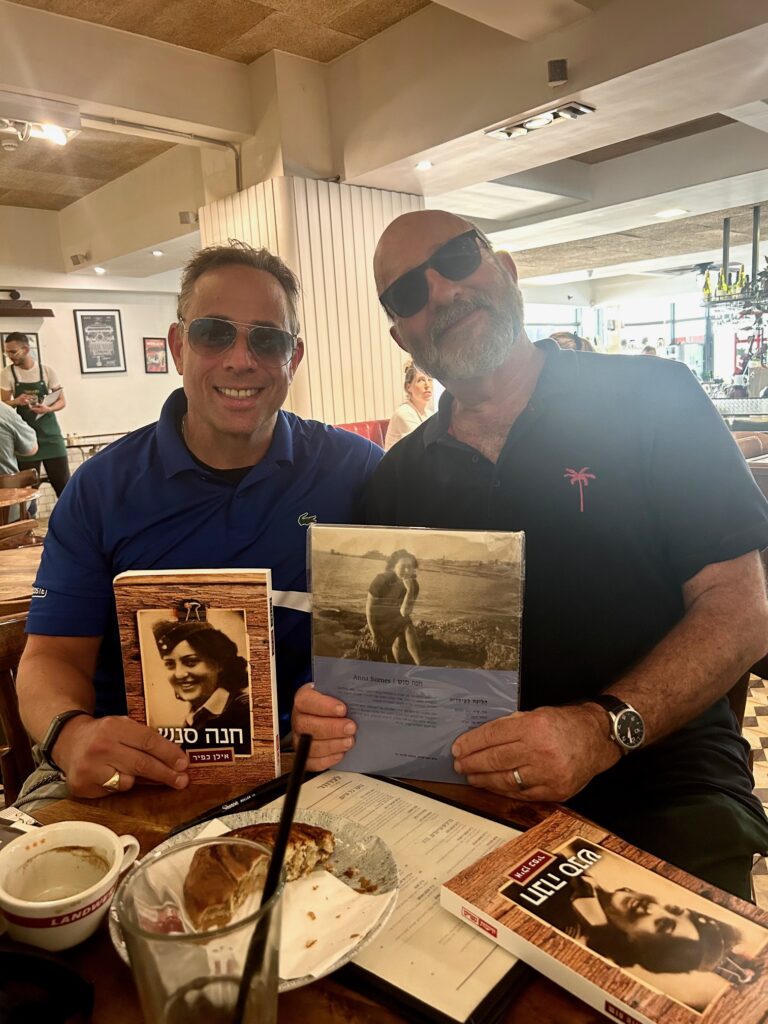
published research. I flew to Tel Aviv in the summer of 2023 to put in “shoe-leather”
investigative reporting. I spent weeks in Israel, retracing the footsteps of
Hannah Senesh, Haviva Reik, Reuven Dafni, Enzo Sereni, and the other
parachutists—of which there were thirty-seven in total.
That summer of 2023, I was lucky enough to meet David Senesh,
Hannah’s only living nephew, a renowned psychotherapist specializing in
treating trauma. David was
himself a POW and tortured by the Egyptians in the 1973 Yom Kippur War. I’ve
since become close friends with he and his wife. They gave me some deep
personal insight into Hannah’s family life.
One afternoon, July 17, 2023, I had a breakthrough moment. I
was roaming through the ruins of the Roman aqueduct in Caesarea Maritima—which
is a stunning national
park in Israel—and it’s where Hannah wrote some of her most
inspired verses. I was thinking of her sanctified image as the “Jewish Joan of
Arc.”
In Caesarea, there’s a Roman concrete breakwater—it’s more than
2,000 years old. When it was built by Herod the Great, he created the largest
manmade harbor in the ancient world. In 1941 and 1942, Hannah was part of a
group of young people building a nearby kibbutz called Sdot Yam, and during her
spare time, she liked to swim out to the concrete breakwater. She was a very
athletic girl: a swimmer, skier, tennis player.
I was alone in these vast Roman aqueduct ruins, and I
remembered what one of her mission teammates—a slightly older parachutist named
Reuven Dafni—had once said about her:
“Hannah was kind of a poet-tomboy.”
Strange turn-of-phrase, but so much more human and relatable
than “holy virgin” or “Jewish Joan of Arc.”
Poet-tomboy. That brought the Hannah of myth
suddenly to life.
Q: Other than learning about a lesser-known person
from history, what lessons and reminders do you want readers to learn after
reading Crash of the Heavens?
A: I set out to write this book for one reader—my daughter,
Lena. She’s an aspiring writer. She’s about the same age as Hannah was in
1943-1944—when most of the book takes place.
My daughter was twenty-two when I turned in the first draft of
the book; Hannah was twenty-two when she embarked on her paratrooper mission in
March 1944.
But as my creative writing advisor in university once told me, “Doug,
you never know what you’re writing about until after you’ve written it.”
He was right. In hindsight, I didn’t write the book just
for my daughter—or for any young woman who aspires to do what Hannah did:
become a poet and author, to leave her mark on the world.
It’s a more universal story—or at least I hope it is—asking
the reader some timely questions:
What do we mean by courage?
Where does moral conviction come from?
In today’s crazy world, it’s worth remembering that there are
some causes worth fighting for—some things for which it might be necessary to
make the ultimate sacrifice.
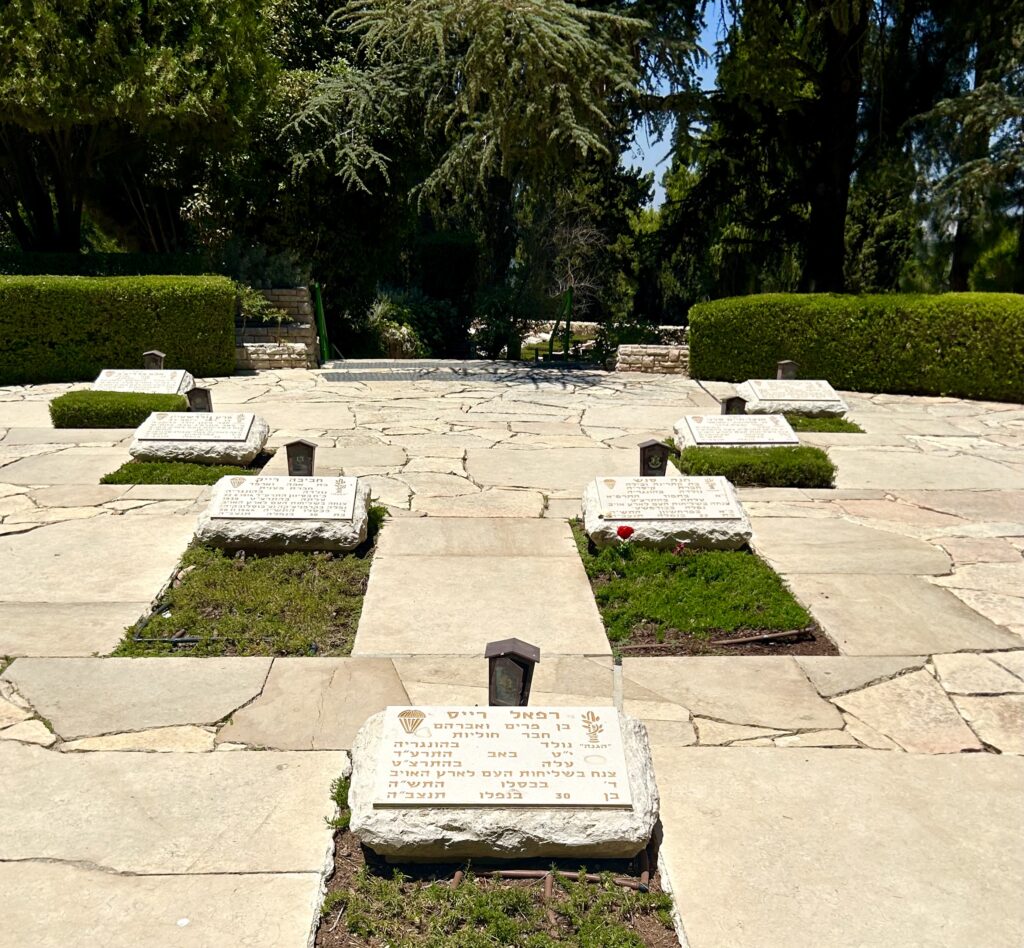
In July 2023, I was at Hannah’s grave in the military cemetery
on Mount Herzl in Jerusalem. Her remains are buried in a special V-shaped “Parachutists’
Section”—one of the seven white headstones of the volunteers who were killed
during the mission.
It was at least 95 degrees outside, blazing Middle Eastern sun,
no one was around. I was alone, in silence, kneeling at her grave for a very
long time.
I remember being awestruck by her courage. By that sense
of conviction: she needed to risk her life to save others.
When she was about to cross over the border into Nazi-occupied
Hungary, she said: “I don’t want to die. Of course not. I want to live. I
still expect a lot from life. But I need to repurchase my right to life.”
Q: If Hannah Senesh was alive today, what are some
questions you would ask Hannah?
A: So many. Wow. Her diary entries are filled with
self-criticism. She’s way too hard on herself!
She set this super high standard for herself, and for what she
expected from others. She turned down several marriage proposals—and yet she
writes at one point, despite all these guys chasing after her: “Who would
believe I’m about to turn 22 and I’ve never kissed a boy?”
I don’t want to give any plot spoilers, but one story which
hasn’t been told before in previous books is how Hannah engineered the escape
of another young prisoner.
In the summer of 1944, Hannah helped this young woman named
Matilda Glattstein to escape from Gestapo torture. Hannah learned that Matilda
was pregnant and she devised a complicated escape plan. And it worked.
Which means she knew exactly how to break out of the prison and
yet she herself didn’t.
She saved another woman’s life—but not her own. I’d ask
Hannah that question:
“If you could rescue Matilda Glattstein, a pregnant
Slovakian-Jewish woman with no military training, why didn’t you rescue
yourself?”
Q: How long have you been an investigative reporter
for? Would you say it’s helped you with writing nonfiction?
A: I always wanted to be an author and journalist, since I was
maybe 11 or 12 years old. In the early 1990s, when I was in my 20s, living in
Manhattan, I got my start in newspaper journalism, mostly writing profiles and
reviews. I’d say the first investigative work was around 1995 or 1996. And it
was related to crime—specifically unsolved crimes—and hip-hop.
MTV News once assigned me to investigate who killed Jam
Master-Jay. I had some magazine assignments to write about the murders of
Biggie and 2Pac. One time I had to go to Detroit and find out what was really
going on when Eminem went into rehab. That was a crazy story!
Also, I started to publish books about organized crime and
detective work. The first was Takedown: The Fall of the Last Mafia Empire,
which I coauthored with Detective First Grade in the New York Police
Department.
Just like being a detective, investigative reporting requires
being persistent, probing, asking people uncomfortable questions, sometimes
hanging out in dangerous places.
That background helps a lot with writing a nonfiction
book.
There’s no single path to becoming an author. There are great
Creative Writing MFA programs—but you also have the example lof Ernest
Hemingway who never went to college and became a “cub reporter” for the Kansas
City Star at age eighteen, straight out of high school, and then was
writing full-time at age twenty for the Toronto Star—just short daily
news stories, crime stories, human interest articles. His first byline was a
goofy first-person piece about going to get a shave at a barbershop from
apprentice barbers!
A lot of times a narrative nonfiction author will rewrite and
repurpose what’s been in other books or news articles—with proper sourcing, of
course.
I discovered quite a few new things in Crash of the Heavens
that have never been in previous books about Hannah Senesh or the Parachutists’
mission. Theres’s been a distortion and oversimplification of the mission—that “no
Jews were saved,” that it was a total strategic failure and “suicide mission.”
The mission, overall, was tragic. But take that example of
Matilda, the pregnant woman being tortured by the Gestapo who found herself
thrown into jail cell with Hannah Senesh.
I didn’t just read the story
online. That was a jumping off point, but then I tracked down Matilda’s
surviving son—a man in his mid-80s named Baruch Glattstein.
I tracked down his business, emailed him cold. First, I heard
from his son, Amichai, in Jerusalem, then I heard from Baruch and I asked a
bunch of questions to clarify the timeline, what happened, when exactly it
happened—and where exactly he was born. Just to get the facts right.
Baruch Glattstein is a former police inspector with a Masters
Degree in organic chemistry—he has numerous patents for forensics inventions
& techniques used by police departments around the world. So being both a
highly respected scientist and a retired cop, he’s a very credible source of
information.
“Whoever
saves one life saves the world entire.” That’s a famous line in the
Talmud. Many people remember that from Schindler’s List.
In this case, you’ve got a chemist-inventor named Baruch
Glattstein who would literally not be alive, his inventions and
scientific discoveries would not exist if Hannah Senesh hadn’t saved his mother
when she was pregnant in 1944.
Finding out those details, getting fresh quotes—that’s what an
investigative reporter does. You always want to talk directly to your sources,
get them to say something fresh on the record.
Q: What wisdom do you have for others who want to
pursue a career in both investigative reporting and writing like you have
done?
A: Okay, not sure I’ve got anything approaching “wisdom.” LMAO.
But I’ll give you a few “tricks-of-the-trade.”
Be persistent. Try to develop thicker
skin. If you’re a good writer, by definition, you’re an introvert, you’re
sensitive to language, sensitive to your surroundings; you’re living in a world
of words; you’re living in your own head. Of course—criticism stings. But you’ve
got to develop a kind of armor, a kind of bullet-proofing to criticism.
If you believe in an idea strongly enough, don’t let anyone
tell you, “No.” If you know deep down that something’s good, keep at it.
Be kind to yourself. Don’t be
overly critical when you’re starting something new. Realize this: almost all
first drafts suck. Even a writer as great as James Joyce threw his early
manuscripts in the fire. But you’ve got to get something down. That’s your raw
material. That’s something you can revise and polish. You can edit bad pages;
but you can’t edit blank ones. Get that first draft down.
And then:
Be ruthless. By which I mean: be ruthless to
your own work. Be kind to yourself emotionally, be forgiving to
your psyche when you’re in a creative space. Don’t worry about how good the
first draft is—you’ll fix the shitty parts later.
But then you pivot; you’ve got to be ruthless with the work—with
your words on the page.
I’ve got two reminders stuck up over my computer monitor right
now. I printed them out in giant bold font and taped them up where I’ll see
them all the time.
One’s the famous writing advice from Faulkner. Anything that’s
too precious, too cute, some super-clever sounding—delete!
And then I also taped up this passage I love from Hemingway’s
memoir A Moveable Feast.
Hemingway’s remembering being a young author, describing waking
up in the morning feeling blocked, anxious because he can’t start a new story,
and he’d sit in front of the fire and throw orange peels into the flames,
looking out at the rooftops of Paris—then he reminds himself of something—he
reassures himself—and this is the passage I printed out:
“Don’t worry. You have always written before and you’ll write now. All you have to do is write
one true sentence. Just write the truest sentence you know.”
A “true” sentence might be something he overheard someone
saying in the street or a café. Or the dialogue between two waiters—like some
of the dialogue I bet he lifted verbatim, in Spanish, and uses in the short
story “A Clean
Well-Lighted Place.”
Words that sound real and honest. Not too precious. Not
ornamental. Not writerly bullshit.
Once Hemingway would nail that “one true sentence,” the logjam
would break, and more sentences would flow.
That’s basic Cognitive Behavioral therapy. (Of course, CBT wasn’t
known about in Hemingway’s younger days in Paris!) Break things down into
discrete tasks. Don’t try to tackle everything at once. Tiny steps. Set a
small goal, get that done, cross it off the list. Incrementally, you break the
logjam of fear, inertia, panic—whatever it is we mean by “writer’s block.”
You get that first good sentence written, things will start
flowing—and once you’re in that flow, and you’re producing decent pages, you have
to pace yourself. Don’t burn out.
You need to treat writing a book going to the gym. Or training
for a long-distance run. You don’t hit the gym only when you’re in the mood—when
you’re inspired. You need to treat writing a book like going to the gym when
you feel down, apathetic, stressed-out, overwhelmed.
A writing regime is almost like a physical routine.
Q: Can you reveal your current project that you are
currently researching and writing right now? Or is it too early to say?
A: Sure. Well, one thing I’ve been working on lately is a film
project. It’s an adaptation of my previous book The Last Boss of Brighton.
That’s in development with a studio in Hollywood. We’re pretty far along. My
book is the source material—but I’m also consulting as a producer and writer.
We’re working on a three-part true-crime documentary at this point.
And, yes, I’ve got a new book project, but I’d rather not say
what it’s about. Not trying to be evasive! You can’t talk too much about what
you’re writing—or what you’re planning to write. Verbalizing it changes
the whole mechanism of how you write. Phrases, scenes, dialogue—they
often come straight from the subconscious.
Which circles right back to that advice I got in college: “You
don’t really know what you’re writing until after you’ve written it.”
Q: Would you please provide social media links so
that readers may follow you?
A: Sure:
On Instagram, my handle is DouglasCentury
Same on Facebook, my handle is DouglasCentury
I’m not on X too much—someone hacked my old Twitter account,
and I had to delete it create a new one—and the handle is CenturyDouglas
My author’s website is douglascentury.com.
There, you’ll find more links and you can always email me.