
Q&A With Betty Jane Hegerat
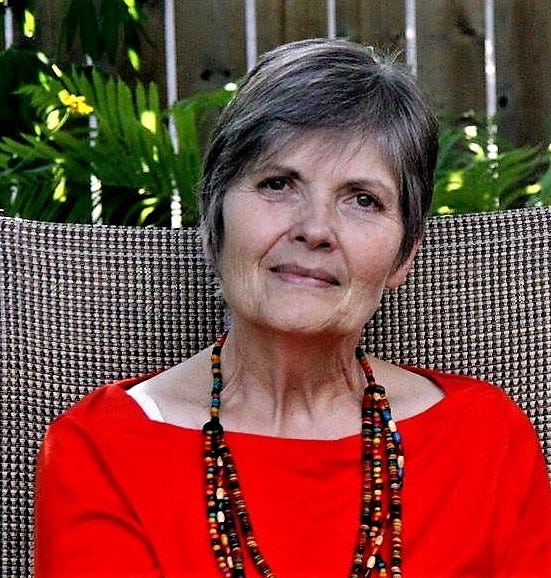
Mickey Mikkelson was kind enough to connect me with author of the short story collection Elephants In The Room Betty Jane Hegerat! According to her bio Betty Jane’s stories have been published in anthologies and magazines. She has five previous books: an adult novel, Running Toward Home (Newest Press), a collection of stories, A Crack in the Wall, (another adult novel) Delivery and Odd One Out and The Boy.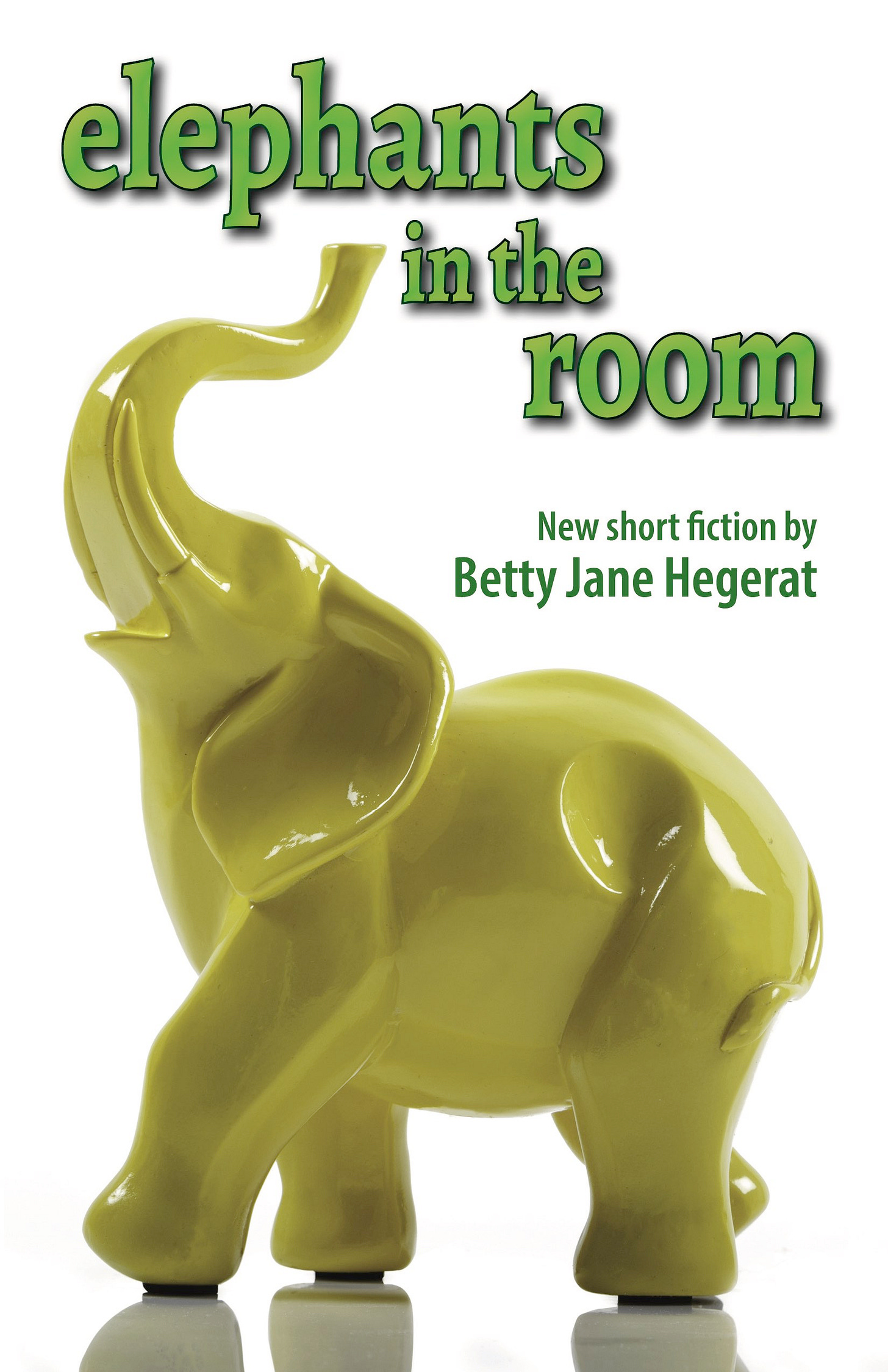
Q: Welcome to Book Notions Betty! Would you please give a brief description of each of your books beginning with your new short story collection Elephants In The Room?
A: Elephants in the Room (Shadowpaw Press 2025)is a collection that leaned heavily on personal experience for the inspiration; memories from my professional life as a social worker, events in my personal life, and stories shared by others. What emerged in the assembling of the collection was the sense of elephants, someone or something not tangible in the story but a crucial presence. The narrators are diverse in age and gender and the underlying themes are universal.
Odd One Out (Oolichan Books 2016) is a book intended for the young adult reader (12- 15 yr old.) The narrator is a 15 yr old boy and the book centers around the arrival of a mysterious stranger, a young woman who claims to have a place in the family. This book was born out of experience working in adoptions, and more particularly in adoption reunion.
The Boy (Oolichan Books 2011) is a book that is a French braid of investigative journalism, fiction, memoir, and meta fiction. It was born out of memory of a mass murder in a town not far from the small city where my family was living at the time. The true story is a horrific one; six members of a family (parents and four children) murdered by the son of the father from a first marriage. Robert Cook was tried quickly and quickly executed as the last man to be hanged in Alberta. More than 65 years later there remain conflicting positions on his guilt. The fiction was written to run parallel to the true story, but with redemption in the ending.
Delivery (Oolichan Books 2009) was my thesis requirement for a Master of Fine Arts in Creative Writing. This novel too, leans on my social work experience in adoption and particularly on the impact on all members of a family when a daughter/sister makes a plan to relinquish her baby for adoption. Focussing mainly on the emotional pain of the grandmother of the baby, it is about “kidnapping” and hiding wtih the baby. The book is told from the perspective of both daughter and mother.
A Crack in the Wall (Oolichan Books 2008) was my first collection of short fiction. The characters in almost all of the stories share a strong sense of home, whether it’s a lifelong sanctuary or a shell as fragile as the person who inhabits it. The stories explore the ways in which people deal with blows to the foundations of their lives, of loss. These are “ordinary” people but abundantly flawed.
Running Toward Home (Newest Press) is a novel told from altering perspectives; a runaway boy, his biological mother, his foster mother, foster father, and his grandfather. The time frame is one night, and the setting is the Calgary Zoo which becomes, in itself, a character. Corey has a habit of running away. The book explores what the two most likely possibilities; is he running away from home, or toward home.
Q: How long does it take you to write whether it’s a novel or a short story collection? What are the challenges you have of writing both?
A: My writing, whether novel or short story, goes through many many drafts before I’m comfortable in pulling it to a close. Some of the stories in the new collection were written 10 to 15 years and previously published in literary magazines and anthologies. The time I spent on each one of them varies. I’ve written short stories that were finished in six months– probably the shortest time. I have others that were partly written or written in rough drafts in two to three months, but I’ve gone to them and spent at least a year producing the finished draft. The novel is another story entirely. When I write short story, I often leave one and start another and perhaps another and then come to the originals with clearer eyes and a better sense of my intention in writing. A novel preoccupies me over a long period of time – a year of writing and then a brief retreat to work something something smaller, but back again soon. Each of the novels I’ve written have taken at least six months to complete.
The challenges? With short fiction the challenge is in finding the best beginning and best place to end. It is also to write tight prose. The novel, after the first draft (or two or three) needs a lot of cut and paste and delete. Again, the best entry and the best exit, but also the decision about narrator, to whom the story belongs, and the hard work of keeping the middle from sagging.
Q: What lessons and messages do you hope readers learn once they finish reading your work?
A: I have taught different levels of writing courses and have done a good deal of mentoring. I emphasize the importance of find the voice in the story. Of not simply writing about characters but writing from inside the skin. I hope that readers feel the emotional impact of that attempt and perhaps affirm that stories are the building blocks of our lives.
Q: Are you allowed to reveal what you are currently writing at the moment?
A: At this point, I’m drawn to personal essay. Certainly, because at my age, I have a large accumulation of life experience — joyful at times, comforting at others, and sometimes a burden of guilt or regret. Almost always there are times of looking back at what I could have, should have, would have done if I could go back with the understanding I have now. Is there another book in my future? I would say that I doubt it, but I know many writers who’ve kept the pen moving well into the decade beyond the one I’m currently living!