Newsletters
Behind The Book With Lisa See
New Information about Upcoming Book Related News
Behind The Book With Lisa See
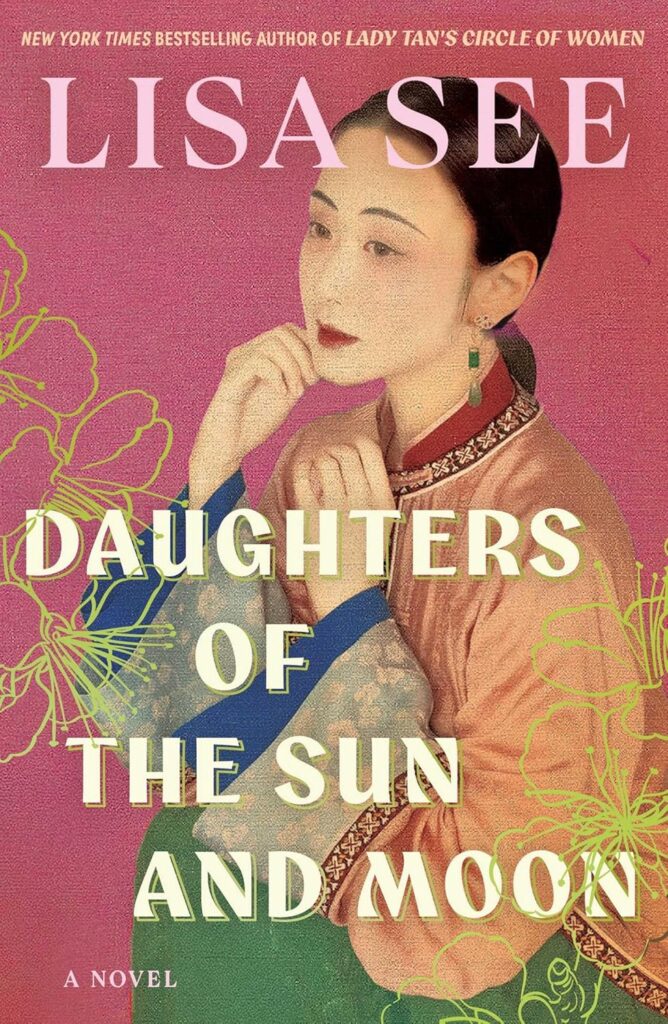
Three years ago, I did a Q&A with New York Times Bestselling Author of Historical Fiction, Lisa See! Lisa has now returned to discuss her new novel Daughters Of The Sun And Moon is available today on June 9th wherever you get your books! If you’re a Lisa See fan or a fan of historical fiction in general, Daughters Of The Sun And Moon is worth the read!
Q: Welcome back to Book Notions Lisa! I can’t believe it’s been 3 years since our first Q&A together! When we did our very first Q&A in 2023, we briefly spoke about Daughters Of The Sun And Moon before there was a title and the setting was in Wild West Los Angeles from the point of view of 3 women based on real women leading up to the Los Angeles Massacre. How did you decide that Daughters Of The Sun And Moon was the correct title for the novel?
A: This is the first Q & A I’m doing for Daughters of the Sun and Moon, so congratulations to both of us! There was only ever one title for this book. I loved the idea of my three characters all being women and therefore “daughters.” The sun and moon part fit because the three women are very different from each other—by class, by their ability to read or not, by the size and shape of their feet, by marriage status, by whether they are free or not. They are as different as can be from each other, yet they are connected as women. I believe this is true for all women around the world. We may look different, practice different religions, live in very different cultures, and yet we are bound by our shared female biology and anatomy, our shared desire to be loved, and our need to survive and endure.
Q: All the people in the novel were real people or based on real people. You wrote in The Note On The History Of The Novel that Petal, was a composite of two women. What made you use both of those women to create the original character of Petal?
A: As you’ve pointed out, Petal is a composite of two women—Sing Ye and Sing Yu. They were sold by their families in China, brought here, and sold into prostitution. From the moment they got here, both women did everything they could to escape and find freedom. I wanted to be in Petal’s shoes, in the moment, as she realizes her father has sold her, as she stands naked on a platform and is sold into prostitution, and when she runs away. Remember this story starts five years after the end of the Civil War. Slavery has been outlawed. It’s enshrined in our Constitution. There was, however, an exception, and that was for the sale and ownership of Chinese women in the state of California.
Q: In 2023, after doing the Q&A you were already working on Daughters Of The Sun And Moon! Did it take you two or three years to write the novel? Did you find yourself stumbling down a research rabbit hole or two?
A: It took me two years, which is the average amount of time it takes me to write a novel. (The extra year had to do with the needs of the publishing company.) The majority of my time is spent on research. The least amount of time, surprisingly, is the writing, and the editing is somewhere in the middle. Still, the research takes the most amount of time by far. Why? Because I love to go down rabbit holes! The research that I do is varied. What was it like to travel on a ship from China to San Francisco—as a wealthy person or as someone in steerage? What was life like for the wife of a Chinese merchant in those days? What was day-to-day life like for a woman sold into the sex trade? What did women wear? How did they do their hair? What about makeup? Did they have bound feet, natural feet, or, like Moon in the novel, walk with a limp because of failed foot binding? What kinds of herbs and other treatments were used in traditional Chinese medicine to help a woman get pregnant, to prevent a pregnancy, to treat tuberculosis, to treat wounds? How did people get around? On horseback, by horse-drawn carriage, walking? In other words…Everything!
But nothing was more important to me than looking at the legal files from 1870-1871 that are held at the Huntington Library. Although the some of the initial records “disappeared” and many of the court documents were destroyed, the Huntington has preserved what was saved. I spent days looking at court records. You must remember that all of this was written by hand. By the end of the day, I felt like a cartoon character with my eyeballs hanging down to my feet, but this was amazing material. I have photos of some of the documents—including a map and little drawings from a court reporter—on my website so readers can get a sense of what it was like to look at these archival materials and what is in them..
Q: Before you mentioned there was a Chinese Massacre in 1871, I had never heard of it. It was something we did not learn in school. What lessons & reminders do you hope readers learn and remember after they finish reading Daughters Of The Sun And Moon?
A: First and foremost, that they’ve had a good read! After that, I hope they’ll come away with a renewed appreciation for friendship, how we make friends, how they sometimes disappoint us, what they bring to our lives, and what we get from these deep-heart relationships. I hope readers consider the history of Los Angeles in its early days and how those roots can be felt locally, nationally, and even internationally today. And last, but hardly least, that readers will think about what was happening to the Chinese in America in the 19th century and more specifically during the Night of Horrors in Los Angeles and how those events relate to what many immigrants are experiencing today in this country. Can we learn from our mistakes or are we doomed to repeat them?
Q: I love how the story is from three women’s point of view, though my favorite sections were reading Moon’s perspective as she remembers the past. What made you write Moons perspective in this way?
A: Moon—who was inspired by Doctor Tong’s wife—is looking back on her life, which not only gives her perspective on what happened to her and what she witnessed, but I hope it also helps readers understand the place and time differently than what they might have in their imaginations. In 1926, when Moon is telling her version of the events of 1870-71, there are cars, electricity, telephones, airplanes, radio, and movies. That’s the Los Angeles we’re all familiar with, not a tiny, dirty, and extremely violent town of just 5,000 people.
In many ways Moon was the most challenging character to write. After all, there was a lot of newspaper coverage about the kidnapping of Dove (drawn by what happened to the real life Yut Ho) and plenty of court records and newspaper accounts about what happened to Petal (based on Sing Ye and Sing Yu). Only a couple of mentions about Doctor Tong’s wife have survived: that she was married to Doctor Tong, that she was one of only seventeen Chinese wives in the city, that she and her dog—a white poodle—survived the Night of Horrors, and that she filed a criminal complaint (something that could be done back then) against the tong (gang) leader whose actions she believed were responsible for the riot. I built her story around those few facts. What would it have been like to be married to the most prominent and respected Chinese in the city? What happened to her lawsuit against the tong leader? The answers to those questions suggested that she had at least some education, that she was older than the other two women and so more experienced, and that she had the courage to file the lawsuit, making her one of the first Chinese women in the country to try to make the American legal system work for her.
Q: If you were able to interview these women if they were alive, what would you ask them?
A: I love this question!!! Very shortly after the massacre, the three women on whom the story is based all disappeared from the historic record. I created my own endings for each of them, so if I had this opportunity, I would ask Petal how she found the courage to keep seeking freedom for herself, I would ask Dove what became of her after her kidnapping, and I would ask Moon if my reasons for her dropping her criminal complaint against the gang leader and what happened as a result mesh with her thinking at the time. Oh, what I wouldn’t do to be able to invite them over for tea and conversation…