
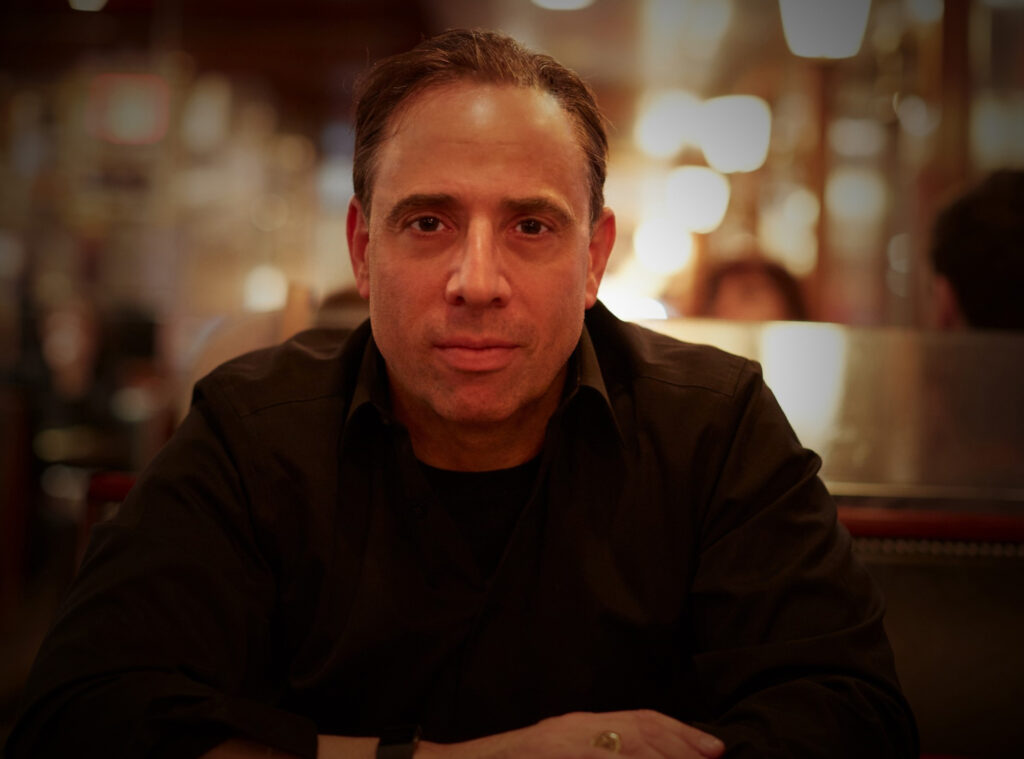
Authors In The Media With Douglas Century
Recently I did a Q&A with New York Times Bestselling Author Douglas Century and now he has returned for his Authors In The Media Q&A as we go more in depth into his investigative reporting career!
Q: Welcome back to Book Notions Douglas! In our Q&A you told me, I always wanted to be an author and journalist, since I was maybe 11 or 12 years old. In the early 1990s, when I was in my 20s, living in Manhattan, I got my start in newspaper journalism, mostly writing profiles and reviews. I’d say the first investigative work was around 1995 or 1996. And it was related to crime—specifically unsolved crimes—and hip-hop. Who were your biggest supporters of your dream of pursuing a career in investigative journalism?
A: My parents. Especially my dad. I remember him taking me to see a talk by Carl Bernstein when I was a kid. Not just to hear the lecture but taking me up to meet this famous investigative reporter who’d broken the Watergate story. I remember shaking his hand and telling him I wanted to be a writer.
I never had any parental pressure to go to law school or pick a more “traditional” career. My dad’s view of life was, hey, if you’re passionate about something, pursue it. If you’re persistent enough, you’ll find a way to make it work.
Q: Did you go to college after graduating to get your degree in journalism or did you apply for a job right after graduating high school?
A: When I got to college, I started writing for the Daily Princetonian. Mostly music reviews, but sometimes I’d cover an art exhibit opening, and freshman year I reviewed a Tom Stoppard play called The Real Thing on Broadway. Then I started my own column in the Prince—that’s what we called the school paper—to review new records once a week.
My degree at Princeton is in English and Creative Writing. I was a fiction writer—my senior thesis was a novel—but we also had courses in long-form nonfiction and in memoir/autobiography.
After college, I moved to New York City, and was getting a Master’s Degree in Creative Writing, but I never finished it—much to my mother’s annoyance!
I’d finished all the coursework, just had to write a thesis, but I got sick of academic life, and I started to make some money writing. Selling articles as a freelancer—book reviews, profiles, small features.
I was the cultural correspondent for a Jewish paper called The Forward, and also writing for magazines like Rolling Stone, Details, Blender, Radar, Billboard, Men’s Journal.
Then I started writing regularly for The New York Times. I was selling an article roughly every two weeks—for the Sunday Styles Section, sometimes for Arts & Letters.
Believe it or not, you could actually support yourself, pay the rent for a Manhattan apartment back in the 1990s, as a freelancer, simply pitching articles to magazines and newspapers.
Q: What are the most important skills you believe someone needs in order to become a successful investigative journalist like you are?
A: Number 1: Develop a thick skin; and get used to rejection. A lot of the things you need to do as an investigative journalist don’t come naturally to me. You’ve got to be aggressive, pushy, like a bloodhound. You’ve got to call people for quotes and reactions—even though you know they’re going to be pissed off.
Your editor will be shouting, “Century, did you get a comment from So-and-so?”
If something unflattering is being said in the article, by professional standard you’re supposed to call the person being referenced and get a reply or statement. If they hang up on you, or curse you out, you can at least write: “We contacted representatives for Kanye West but they declined to comment.”
Number 2: Get the details right. If you’re on the scene reporting, observe the little atmospheric things so you can paint a visual picture for the reader. And take very precise notes. If you’re interviewing people, make sure you get your quotes right.
I’ll have a spiral notepad making notes in my chicken scratch writing, but I always record people and then transcribe the interview myself.
There’s nothing worse than being misquoted. It’s happened to me a few times, so I know how shitty it feels.
Number 3: Do your own fact checking. Even when an article is about to go to press—or these days, when it’s about to be posted online—I’m always triple-checking the spellings of names, the accuracy of dates.
Because in the New York Times, if you got the slightest thing wrong, they need to run a correction—and that can be embarrassing.
Things are different these days—if you see that you’re wrong about a detail, date, or name in an online piece, you can contact your editor and fix it quickly as the piece refreshes.
Q: In our Q&A you wrote about how MTV News assigned you to investigate who murdered Jam Master Jay and had magazine assignments to write about 2Pac & Biggie’s murders! Do you believe P-Diddy with his criminal past becoming more out in the open, that he might have had something to do with 2Pac & Biggie’s deaths? Did you hear they reopened 2Pac’s murder case?
A: Sean Combs has never been charged in either death, so I won’t make unsubstantiated allegations. The evidence is circumstantial—what we’ve all probably seen on YouTube, DJ Vlad and the Art of Dialogue talking with Keefe D and Gene Deal, and also the interviews in that very disturbing documentary 50 Cent produced for Netflix, Sean Combs: The Reckoning.
The most serious allegation is that Combs put a $1-million bounty on the heads of 2Pac and Suge Knight, and that a hustler named Eric “Von Zip” Martin—a longtime Combs associate from Harlem, is alleged to have been the go-between who was supposed to pay these Southside Crips who did the shooting after the Mike Tyson fight in Las Vegas.
In September 2023, the Las Vegas Metropolitan Police Department reopened the murder case of 2Pac, and they charged Keffe D with murder, though he wasn’t the shooter. According to his version, his nephew, Orlando Anderson was the gunman.
It’ll be extremely hard to prove in criminal court that Sean Combs had anything to do with it.
The alleged shooter, Orlando “Baby Lane” Anderson, was murdered in 1998.
Eric “Von Zip” Martin died of cancer in 2012.
You know, it’s like that Benjamin Franklin aphorism: “Three may keep a secret, if two of them are dead.”
All these folks giving interviews, doing podcasts, connecting the dots—they can’t testify in court because if they were not eyewitnesses, the judge will throw that testimony out as hearsay.
In the big picture, there was never an East Coast vs. West Coast war. That’s total bullshit. There was a personal beef between two record executives with enormous egos: Sean “Diddy” Combs and Marion “Suge” Knight.
It escalated and spilled over, involving their artists, hangers-on and criminal affiliates like the Mob Piru gang.
Diddy and Suge likely know a lot more than they’re ever going to say.
The murders of both 2Pac and Biggie will likely remain unsolved mysteries, cold cases, barring some kind of remarkable deathbed confession, you know, a “Come-to-Jesus” moment.
But I doubt that’ll ever happen.
Q: Which books, tv shows and movies about journalists do you enjoy reading and watching? Why?
A: All the President’s Men. Carl Bernstein played by Dustin Hoffman, Bob Woodward by Robert Redford—brilliant film directed by Alan J. Pakula. The tension throughout, the dogged reporting, the way they keep pressing and coaxing information from sources, the sense that they’re putting their lives in danger to get this important story, well, it inspired a lot of young people to want to become investitive reporters.
Foreign Correspondent. A great film from 1940, directed by Alfred Hitchcock. A black-and-white suspense spy thriller, set right before World War II breaks out.
The editor of this New York City daily paper sends a daily crime reporter—an average guy who uses the pen name “Huntley Haverstock”—over to London to find out what’s going on geopolitically. Early in the movie, the editor shouts a great bit of dialogue:
“I don’t want any more economists, sages, or oracles bombinating over our cables. I want a reporter! Somebody who doesn’t know the difference between an ‘ism’ and a kangaroo!”
Q: This question is my favorite question to ask anyone who used to be or is still a journalist! You interviewed interesting as well as dangerous people! Can you give a list of people, famous, and infamous, that you’ve interviewed and discuss what those experiences were like?
A: I’ll leave out the various gangsters and mafiosi—that’s a whole different conversation—and just stick to your question about famous people.
I spent years interviewing and profiling celebrities, so a pretty long list.
Obviously, Ice-T, we’ve known each other for years, and I coauthored two books with him. In 2011, we published Ice: A Memoir of Gangster Life—From South Central to Hollywood. And in 2023, Split Decision.
Here’s a few more, in no particular order—I’ll insert hyperlinks where I can.
Jay-Z. Nas. I wrote about their beef in 2002 and the history of battles in hip-hop. The piece is called “Two of Rap’s Hottest Return to the Dis.”
Queen Latifah. Leonard Nimoy. Carl Sagan. Billy Crystal. Cam’ron.
Who else…?
Oh, and one that just popped into my head the other day:
She was only 19 years old, still a member of Destiny’s Child, and she was so psyched to be in a New York Times article. Hahaha! Imagine that!
I remember calling her at home in Houston, Texas. It was her first acting role, starring in a hip-hop version of the opera Carmen, her first time ever being mentioned in the Times. And to a lot of people back in the day, being in the so-called “newspaper of record” was a sign that they’d finally made it. Meaning, they were famous in “mainstream America.”
There’s a paywall on that piece but if you’re a subscriber you can read the article here.
The interviews that stick with you are the people you idolized as a kid, whose movies you watched or whose music you grew up listening to.
Joan Jett, for example.
I grew up with Joan Jett’s records on the radio. And one day my editor at the New York Times sent me to a WNBA game with Joan Jett at Madison Square Garden. Joan had written a hype song for the New York Liberty and we sat courtside together just drinking sodas and shooting the shit.
That was a regular column I used to write called “A Night Out With.”
You can read my Joan Jett one here.
I don’t think I’ve ever been starstruck while doing this kind of celebrity reporting. You can’t be starstruck and still do your job. But there was this long front-page feature I wrote for the New York Times where I found myself hanging out with Prince two or three nights in a row.
Prince was a genius—musically, as a songwriter, as a performer, as a cultural icon. I must have seen the movie Purple Rain twenty times. And his concert film Sign ‘O the Times is brilliant. I constantly rewatch his guitar solo on “While My Guitar Gently Weeps” at the 2004 Rock & Roll Hall of Fame inductions.
For this story in the Times, back in 1999, we were in a few nightclubs, behind velvet ropes in VIP banquets with all these other celebrities—popping bottles, partying.
Prince would sit there quietly and only drink tea. He struck me as being so shy. Didn’t drink, smoke, do drugs.
Prince was in this phase where he wasn’t giving any interviews, wasn’t dealing with the press at all—but he suddenly took my notebook out of my hand, grabbed my pen, and wrote a quote for me to use in the New York Times article.
I still have the reporter’s notebook with his words:
“Ananda is Cleopatra.”
A few years ago, I put a picture of the notebook on my IG.
This is probably 1 a.m. in Joe’s Pub, the music’s blasting, and kind of randomly, he starts talking to me about Jesus.
I told him, “I’m Jewish” and he said, “It’s not about being Jewish or Christian, brother, it’s about attaining Christ Consciousness, you feel me?”
This went on for at least five or ten minutes. I just kind of listened and nodded, zoning out, thinking: “Shit! This is nuts. You’re in Joe’s Pub having a private conversation about spirituality and mysticism with Prince…”
The first hip-hop record I ever bought—on vinyl—was LL Cool J’s Radio—after I heard “Rock the Bells” at a party in 1985.
Flash forward to the summer of 1999 and my editor at the New York Times calls me and asks if I want to go to the movies with LL Cool J. I mean, sure, why not? That’s what I typically do on a Tuesday night, right?
He was starring in a crime thriller called In Too Deep, and we were going to an advance screening at the Loew’s Theater on the Upper West Side.
When we pulled up in front, the theater was filled with fans who’d won tickets as part of a promotion on Hot-97.
But the thing was, no one knew LL Cool J was going to be there.
They held half a row of seats for us—LL, me, a few of his friends, his publicist—and we sort of snuck in unnoticed once the lights went off.
Then the movie starts and LL is laughing really loud at all the jokes, yelling at the screen—because in the film he played this super-evil villain drug-lord, and he’s shouting at his own character—just like any other fan.
And suddenly, halfway through, he stands up, and says:
“Yo, I’m kinda hungry. I’m gonna get some hot dogs. You want anything?”
Only when the lights came on did the fans see that LL was there and they went totally ape-shit. Screaming, swarming him, wanting autographs.
The story was a blast to write; it was called:
A Night Out With: The Outta Sight Rapper.
Super early the next morning his publicist set up this follow-up. She said, “Todd would like to invite you to breakfast.” His real name is James Todd Smith—his wife and most of his friends call him “Todd.”
I took a cab to his five-star hotel on the Upper East Side and we just had breakfast alone in the hotel restaurant.
I remember he was eating plain oatmeal with berries. Super healthy. We sat there and kicked it for about an hour or so. He asked me what it was like being a writer and how I became a writer … Regular shit. It wasn’t a “rapper and reporter” interview. Just a conversation between two dudes.
I asked him about getting up in the theater last night and going to get hot dogs and he gave me this great on-the-record quote:
‘I’m not an egomaniac,” he said later. ”I’m not going to stay in my seat because my big scene is coming up.”
With almost all the celebrities who’ve had long-lasting careers in film, TV, music, once they’re not “on”—once they’re not in the spotlight—they’re down-to-earth people and super chill to hang out with.
They have this celebrity persona they wear in public like a mask—and then there’s the private person—the real person behind the mask of celebrity.
LL Cool J is “Todd.” Queen Latifah is “Dana.”
That’s exactly why they’ve had such longevity. They don’t believe the hype. They’re not gassed up on their own fame.
They realize they’re fortunate. At some point early on in life they got their lucky breaks, worked very hard and maximized their potential.
They see show business as exactly what it is: their business; their job.
