Newsletters
Q&A With Andrew Wilson
New Information about Upcoming Book Related News
Q&A With Andrew Wilson
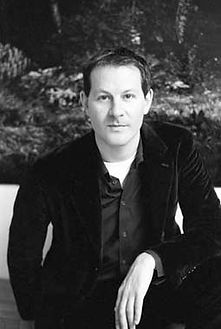
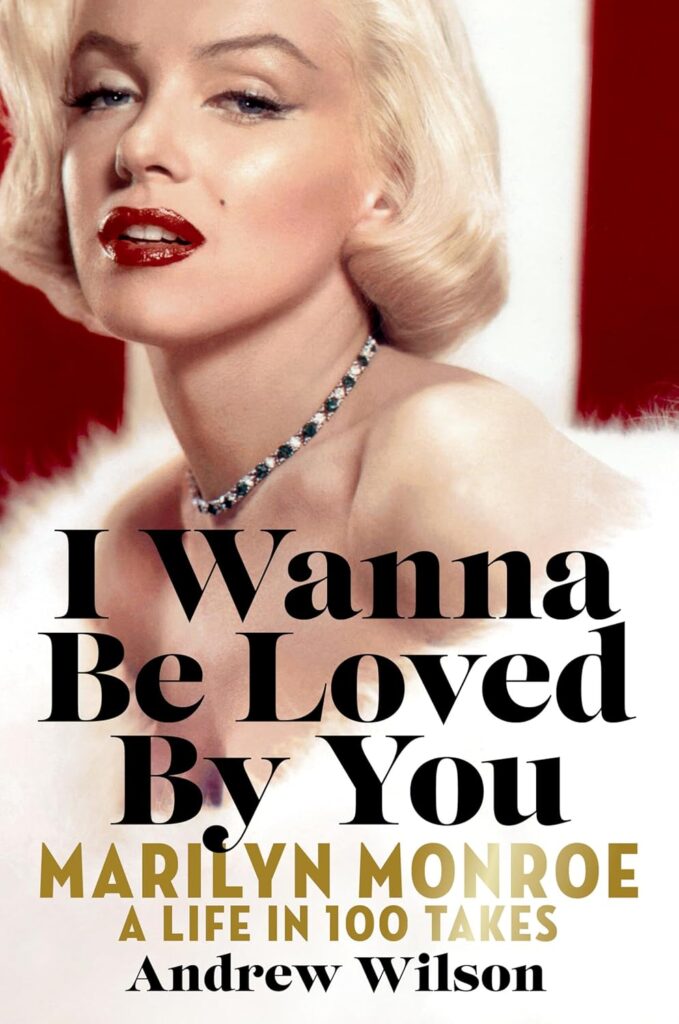
I have the honor of interviewing author and journalist Andrew Wilson! I recently finished his Marilyn Monroe biography I Wanna Be Loved By You Marilyn Monroe A Life in 100 Takes. Andrew’s other works include biographies about Patricia Highsmith, Sylvia Plath, and Alexander McQueen. Andrew’s journalism writing has appeared in The Guardian, The Daily Telegraph, Smithsonian Magazine, The Washington Post & many others! Andrew has appeared on BBC’s Front Row, Great Lives, Woman’s Hour, Today & Sky News!
Q: Welcome to Book Notions Andrew! Would you please give a brief description of your books beginning with I Wanna Be Loved By You?
A: Thanks so much for inviting me! I’ve been lucky enough to always work as a writer, first in feature writing for national newspapers and magazines, and then as an author. My latest book, I Wanna Be Loved By You: Marilyn Monroe, A Life in 100 Takes, is book number thirteen. In addition to journalism, I’ve written a mix of fiction and non-fiction. My first book was a biography of Patricia Highsmith, the author of The Talented Mr. Ripley and Strangers on a Train. Since then, I’ve written biographies of Harold Robbins, Sylvia Plath, Alexander McQueen, and a group biography of the survivors of the Titanic. My novels include The Lying Tongue, a psychological thriller about the art of biography; four novels with Agatha Christie as my sleuth; and two contemporary psychological thrillers under the pseudonym, E.V. Adamson.
Q: How do you choose who you will write biographies about?
A: It’s very much an instinctive, emotional process. I need to find someone who intrigues me in some way. Either this is someone who has never been written about before: I was the first biographer of Patricia Highsmith, Harold Robbins and Alexander McQueen. Or, as is the case with Sylvia Plath and Marilyn Monroe, they’ve been written about SO much that a number of myths, falsehoods and preconceptions have built up around them. I’m often drawn to people who have had experiences with mental health issues, and I’m interested in the links between mental health and creativity. I like to go deep into the psychology of an individual, so the books tend to focus on subjects who have led complicated, complex lives, often individuals who are in search of their own identity. I also like to be able to draw on primary research, so this is access to unpublished archival material such as diaries or letters, and I also love to interview people too. I’m not interested in writing hagiographies of people, but neither do I want to paint my subjects as monsters. If a subject has behaved badly, I like to get to the source of why they’ve behaved badly to try to understand the roots of their complex behavior. I think this paints a more rounded portrait of a person than just a simple, one-dimensional approach.
Q: I can tell you put a lot of attention to detail to your research about Marilyn Monroe! Whether its information we already know or new information! I had no idea that Marilyn tracked down her real father Charles Stanley Gifford! Why was now the time to research and write a biography about Marilyn Monroe? What do you hope readers learn once they finish reading your book?
A: It’s 100 years since Marilyn Monroe was born. And although there have been hundreds of books written about her, I thought it was time for a new approach. So instead of a traditional birth to death approach, the book is written as 100 ‘takes’: vignettes or snapshots, which give a kind of kaleidoscopic feel to the book. So, with each new chapter you get the sense that the kaleidoscope has turned to present Marilyn in a new light, to see her through a new prism. In addition to this, I wanted the book to have a fresh feel, so I spent years tracking down unpublished sources, particularly interview tapes of people who knew Marilyn. I wanted to bust a few myths along the way too, stories which have been repeated and repeated over the years, but many of which have no basis in truth. The last part of the book concentrates on the mysteries of Marilyn’s death in August 1962, at the age of 36. I trace the root of some conspiracy theories and unearthed an amazing array of new material which goes some way to get to the truth about how and why Marilyn died. Having said that, I didn’t want to present Marilyn as a victim. In my eyes, she is a survivor and she achieved so much in her 36 years.
Q: How long does it take you to research and write your biographies about famous people?
A: It depends on the life and if there is a deadline. So, with Patricia Highsmith that took five years. I travelled all around the world interviewing her friends, lovers (and enemies!) and I spent a year in Switzerland transcribing her diaries and letters (she died in Switzerland and left all her archive to the Swiss Literary Archive). My book on Marilyn Monroe also took five years, again because of the mass of material and the need for me to find unpublished archives. Also, I knew that in 2026 it would be 100 years since her birth so it the anniversary would be the perfect time to publish the book.
Some books such as the Alexander McQueen biography took much less time, about 18 months, because towards the end of the research process I learned there was going to be major exhibition about the designer at the V&A and the publisher asked me to deliver in time so it could be out in the shops at the same time. Luckily, I’d spent a year interviewing lots of the key people – his friends, lovers and family – and done most of the archival research, so it was a case of speeding up the writing, which was done in six months.
Q: You are a journalist and author! How do you juggle doing both and what is your advice for anyone wanting to be a journalist, an author or juggling both careers like you do?
A: After an English degree at King’s in London, I did a post-graduate course in journalism for a year at City University in London. And I think doing a course like this is wonderful training because you learn all the basics: law, shorthand, ethics, interviewing, research, pitching etc. But there is no standard way into journalism and it’s changing all the time. Recently print journalism has taken a real hit and it seems as though there are more openings in broadcasting, so I’d be tempted to advise people to think about opportunities in podcasting, audio books, and radio and TV. I worked exclusively as a journalist for the first ten or fifteen years of my career, and I do much less now, often writing pieces to tie in with the release of my latest book. But I still read all the newspapers each day and I’m a real news junkie!
Q: Would you say that your career as a journalist helped with researching and writing nonfiction? Do you enjoy journalism writing or book writing more?
A: I think journalism does help in writing non-fiction because the skills of researching and telling a story are the same, whether that’s in short form features or long form books. You start out knowing next to nothing and by the end you have become an ‘expert’. Obviously, this all depends on how much time you have. I love the quick fix of journalism: in the morning you pitch and idea, have it commissioned by lunchtime and in some cases must file by the end of the day for publication tomorrow. But then I also love the in-depth research that comes with writing a book, building up important relationships with sources, spending time (sometimes years) in archives, and really immersing myself in a subject’s life. And then there’s the thrill of seeing your book for the first time, which is such a wonderful feeling.
Q: If it’s not too early to discuss, who are you currently writing a biography about?
A: I’m still thinking about what to do next. As I said, this is just as much an emotional process as an intellectual one. I must feel there’s something unsaid about a subject, whether this is a secret or a mystery or an aspect of their life that hasn’t been covered. I love the feeling when I seize on a new subject – there’s a real sense of excitement, of anticipation.
Q: What’s it like having your work appear in The Guardian, The Daily Telegraph, Smithsonian Magazine, The Washington Post & many others?
A: I love seeing my work in print, whether this is the Sunday Times or Daily Mail or Telegraph. And it’s wonderful to write for American readers too. There’s nothing like the thrill of a byline!
Q: What is it like appearing on BBC’s Front Row, Great Lives, Woman’s Hour, Today & Sky News?
A: It’s always a little nerve-wracking before appearing on radio or television – especially if it’s live. But I’ve got used to it now and regularly talk to listeners and viewers about my work. I like sharing details of the research and writing process. I also speak regularly at literary festivals around the world – and there’s nothing like the feeling of talking about something you’re passionate about and feeling the crowd engaged, whether that is they are feeling moved, amused or saddened. And I love the questions that come with events too – you never know what you might get asked next!
Q: Speaking of books about Marilyn Monroe, what did you think of Marilyn and Her Books: The Literary Life of Marilyn Monroe by Gail Crowther? I thought it was amazing! Another recommendation, if you haven’t read it yet, is a historical fiction novel about Marilyn’s friendship with Ella Fitzgerald titled Can’t We Be Friends A Novel of Ella Fitzgerald and Marilyn Monroe by Denny S. Bryce & Eliza Knight!
A: I loved Gail’s book – and we know each other from our work on Sylvia Plath. We’ve become friends over the years and I like to think that my biography and her book serve as compliments to each other. We both agree that Marilyn has attracted a great deal of myth making over the years, and some misogyny too. We both want to reframe Marilyn, but hopefully not do this in a clumsy or patronizing way. As for the book about Marilyn’s friendship with Ella Fitzgerald, I haven’t read that one yet, but it sounds intriguing. And I have a chapter on their friendship in my book too.
Q: What’s it like living in Oswaldtwistle Lancashire England? I’m an American who can’t wait to travel once I have the funds! Where are your favorite places in Oswaldtwistle, Lancashire, England that you would recommend to first timers to go see?
A: I don’t live there anymore. I was born there and spent the first 18 years of my life there. I split my time between London and Devon now. London changes all the time, and I love its museums, theatres, parks, restaurants and lots of my friends still live there. And I love Devon for the amazing nature, the coastal walks, swimming in the sea, nature, and also my group of friends there too. I’m lucky that I get to experience both places!
Q: Would you please provide social media links so readers of the blog and I may follow you and your work?
A: Instagram: andrewwilsonaw
Website: andrewwilsonauthor.co.uk
Twitter: andrewwilsonaw
TikTok: I Wanna Be Loved By You