Newsletters
Authors In The Media With Iris Yamashita
New Information about Upcoming Book Related News
Authors In The Media With Iris Yamashita
It’s been some time since I interviewed Iris Yamashita, whose not only an author, she’s also a screenwriter, one of her credits being Letters From Iwo Jima directed by Clint Eastwood, and has had a 6 part audio series titled The Purple Heart Warriors. You can read my past interviews with Iris in these links https://booknotions.com/qa-with-iris-yamashita/ https://booknotions.com/behind-the-book-with-iris-yamashita/ !
Q: Iris, welcome back to Book Notions! Where did your interest in screenwriting come from?
A: Thanks for having me! Regarding screenwriting, I hadn’t really thought about pursuing it until late into adulthood. I originally wanted to write a book, but found I had a hard time actually finishing a novel. Since everyone in Los Angeles seems to be writing a screenplay, I decided to give it a try and started taking night classes while I worked a full-time job. The shorter format of a screenplay (about 100 pages with lots of white space) made it much easier to finish.
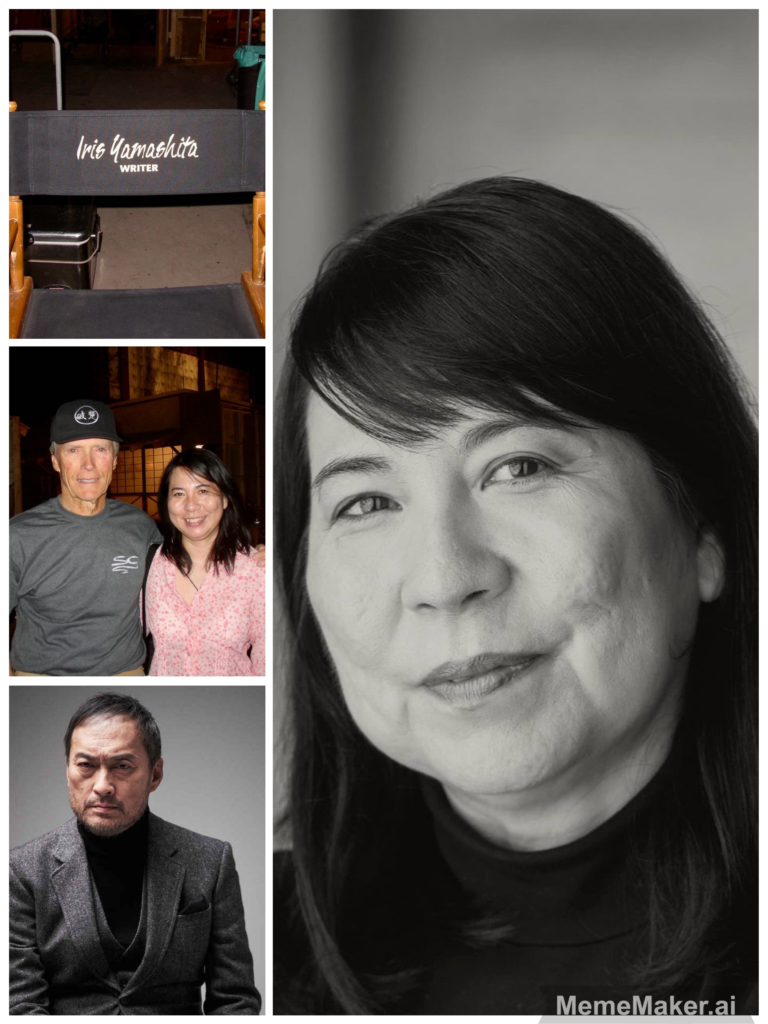
Q: What was it like writing the screenplay to Letters From Iwo Jima and working with Clint Eastwood? Were you also able to meet Ken Watanabe? Ken seems like such a gentleman!
A: It was a dream job and a once in a lifetime experience. Clint Eastwood was always kind and considerate. Despite the tough-guy persona he brings to screen, he is much more relaxed on set and treats his cast and crew respectfully. It’s hard to believe that he directed his latest movie, Juror Number 2 at the age of 93! It was definitely an honor to work with him. I have written a Substack piece about it at https://writersblockparty.substack.com/p/what-it-was-like-working-with-clint
Ken Watanabe was also a pleasure to work with. He wanted to discuss script notes with me early on, and we were also on the same press tour during the premiere in Japan, so I interacted with him quite a bit. He was always friendly and yes, a true gentleman. Aside from bringing depth to the role of General Kuribayashi, Ken has also overcome a lot in his life, battling leukemia and stomach cancer, so I have the utmost respect for him in his perseverance and work ethic.
Q: I know the first time I interviewed you I asked how you were able to juggle writing with screenwriting. You wrote As a screenwriter, it’s typical to be juggling numerous projects at one time. You are always looking for your next project and often need to be pitching or outlining one project while writing another. But there are lull periods when you’re waiting for a contract to be finalized, or waiting for notes on a step, and that’s when you can be working on something else. Writing a book takes a greater time commitment and more discipline to finish, so it wasn’t really until I had a deadline that I kept on a steady track with it. In your opinion, has it gotten easier juggling writing books and screenwriting?
A: Since I moved to Portugal, I am no longer doing much screenwriting. It’s difficult to be outside of Los Angeles for that. I continue to field inquiries and discuss projects with people, including a few projects that were still “open” when I left California, but I don’t know if they will eventually lead to anything. In order to make the minimum amounts to quality for Writer’s Guild health coverage, it was typical to be juggling numerous projects at once, but thankfully, Portugal has nationalized healthcare.
Q: Would you say that screenwriting has been a great help in strengthening your skills for writing books?
A: Definitely. The basic tenets and structures of screenwriting can easily be transferred to novels. Intuitively, I like to follow the same type of outlines and act structures used in screenwriting. Books are a little more open to wandering and going off into tangents than in screenwriting, but I like to have the main plot points outlined in order to know what direction to head.
Q: You did an audio show that came out in 2024 called The Purple Heart Warriors. What was that experience like?
A: I really enjoyed working on this with BBC World Service. It felt like a much more hands-on and intimate experience compared to film. I was lucky enough to be at the recording, and it was such a pleasure to work directly with the cast and production team. The subject matter also felt important, as not many people know about the Japanese American 442nd Regimental Combat Team who fought in World War II. The podcast was also shortlisted for several audio awards and won a Rockie Award, which was icing on the cake.