Newsletters
Who's the Better Author: Alison Weir vs Philippa Gregory
New Information about Upcoming Book Related News
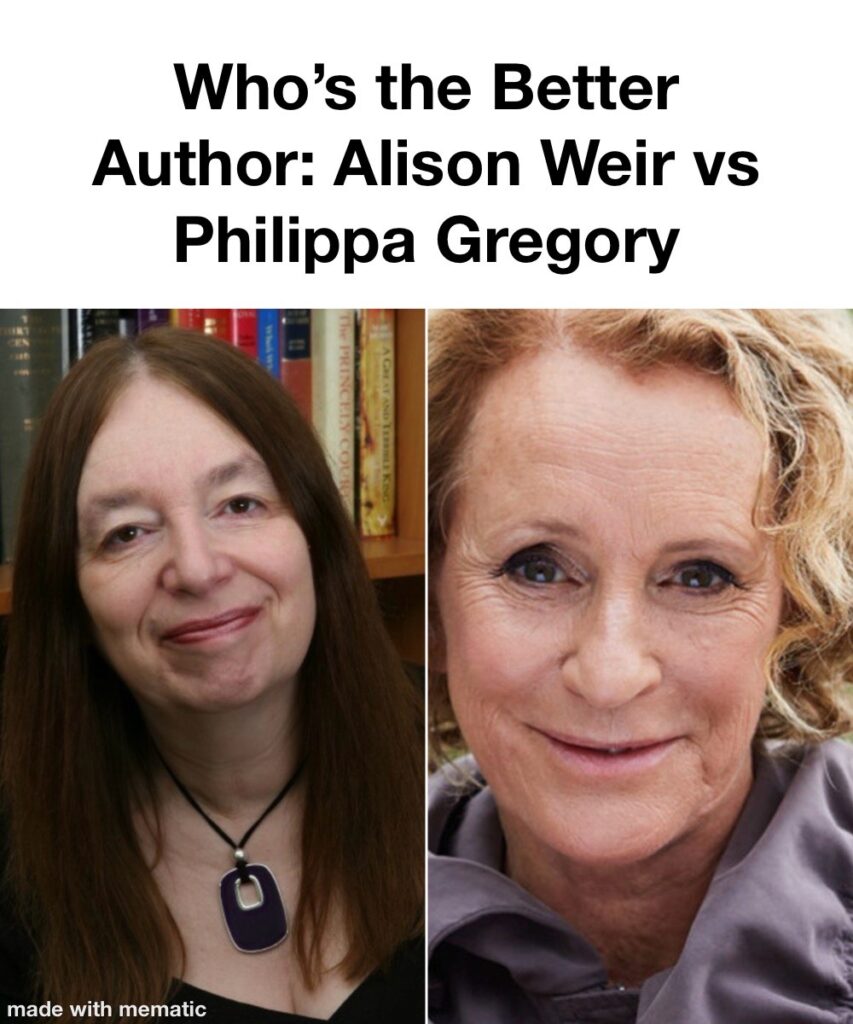
Who’s the Better Author: Alison Weir vs Philippa Gregory
Two popular authors who write British historical fiction are Alison Weir and Philippa Gregory. Both have written extensively about the War of the Roses and Tudor eras, bringing queens & court politics to life for todays readers. However, while both authors write about similar historical periods, readers and historians alike remain divided over which author presents history in a more accurate, nuanced, and responsible way.
Similarities
Both authors focus on British royal history specifically during The Plantagenet & Tudor eras. Many of their books center their novels on queens, consorts and influential women at court. Their work has helped bring attention to historical figures who are oversimplified or underrated, bringing them to life for today’s readers.
Differences
This is where the similarities end. Philippa Gregory builds her storytelling and research around speculative or controversial theories and presents her opinions as the truth even when historical evidence of hers is very farfetched or it’s been disproven by multiple credible sources and historians.
Alison Weir had a career as a credible historian researching and writing nonfiction for decades before writing historical fiction. Alison makes sure to stick to the time but when there’s something that none of us know for sure, that’s the only time she uses imagination, to fill in the blanks.
Portrayal of Women in Gregory’s Novels
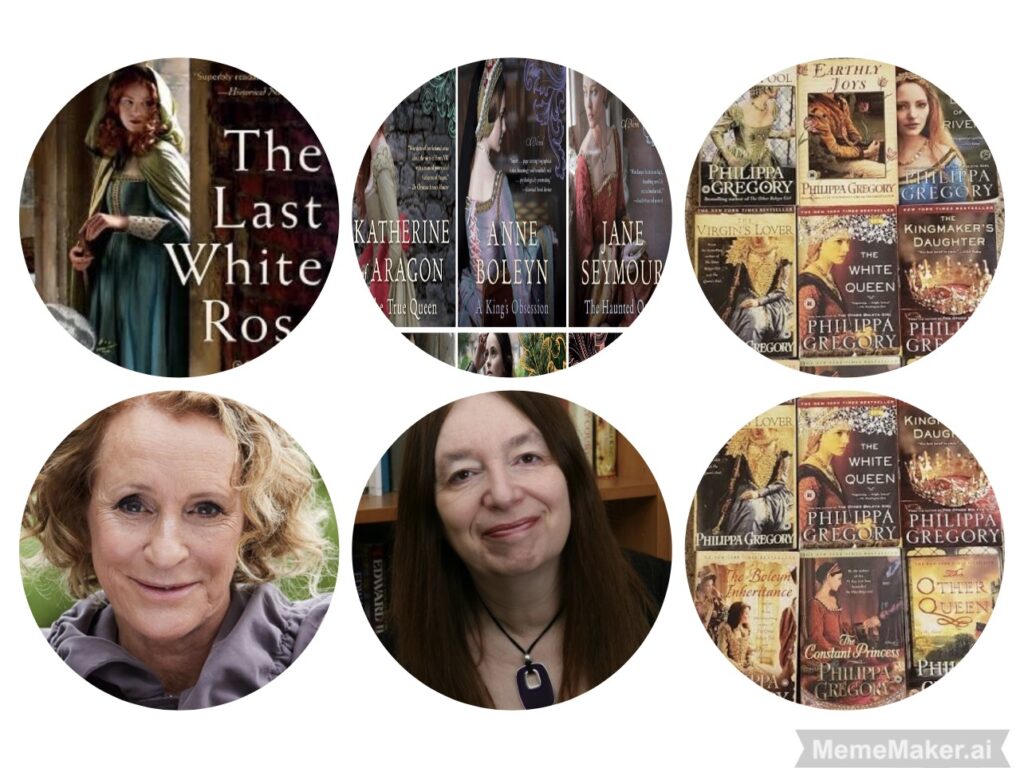
Phillipa Gregory adds dramatic, scandalous and very far–fetched twists to historical figures. In The White Queen Novels, Elizabeth Woodville and her mother Jaqueta Rivers use witchcraft to curse their enemies. Gregory also has it to where; Elizabeth sends her youngest son Richard away in hiding and they use a look alike boy to send in his place to join Edward. In the infamous princes in the towers part of history, Elizabeth (along with her daughter) curses the line of whoever killed the princes in the tower. Margaret Beaufort is portrayed as orchestrating the deaths of the two princes. Elizabeth of York and Henry VII were portrayed as having an uneasy first start to the marriage due to them being in enemy families and Elizabeth suspecting Margaret had a hand in her brother’s death. In the novels about Katherine of Aragon, she portrayed Katherine and Arthur as consummating the marriage between her and Arthur before marrying Henry despite several historical sources that refuted this. The Other Boleyn Girl (both the novel and the movie from hell) portrayed Anne Boelyn as being the elder sister of Mary Boleyn and competing for the kings love as well as having incest with her brother George so she could conceive a child after losing Henry VIII’s son.
Portrayal of Women in Weir’s Novels
In the case of Alison Weir however, she sticks closely to historical evidence. The way Alison portrays women is with nuance, intelligence and political savvy. Alison showed how these women navigated court life and personal challenges presented with the time they were living in rather than making the story sensational and overly dramatic. In Alison’s novel about Katherine of Aragon, Katherine isn’t a passive victim and she’s a strong resilient queen who gets through heartbreak and betrayal with determination and dignity. Anne Boleyn is more than just a temptress; she’s well educated and shaped by her education abroad and the political necessities of her time. Elizabeth of York is often overlooked in history, but she’s portrayed as vividly thoughtful and understands the circumstances of her time. Elizabeth and Henry VII are portrayed as getting along well and having a happy marriage throughout the book.
Conclusion
To give Philipa Gregory some credit, she brought renewed attention to the Wars of the Roses and Plantagenets through her White Queen novels and the television series based on them. Readers and I were introduced to the connection between Elizabeth Woodville being the mother of The Princes in the Tower as well as the rest of the Plantagenet family through her work. While Philipa Gregory’s novels remain popular with many readers, she has been criticized by multiple historians for presenting her personal theories and speculation as historical fact, even when historical evidence has proven her incorrect.
Alison Weir only fictionalizes to fill in the blanks where history is silent. Alison grounds her stories in evidence and the realities of the time. The historical figures speak, think and act within the time rather than through a modern lens.
In my Behind The Book discussion with Alison Weir about The Passionate Tudor her novel about Mary Tudor, later known as “Bloody Mary” she clearly addressed this balance directly. When I asked how she approached portraying such a controversial queen and what she hoped readers would learn from her novel, Weir explained:
Q: I love your portrayal of Mary that while you didn’t make excuses for her actions as Queen, you also didn’t portray her as a total monster either. What new lessons do you hope readers fascinated with royal history learn after reading this book?
A: I hope that they will arrive at a balanced view and understand why Mary acted as she did. I was concerned to hear that schools in the UK are teaching the new revisionist view of her, when there is a lot of evidence to the contrary. Yes, it is important to stress her achievements, but we must take heed of what the historical sources are telling us.
This approach is an example of the clear difference between the two authors. Gregory prioritizes dramatic storytelling, while Weir prioritizes historical balance, evidence and respect for the past and only using fiction to fill in the blanks.